

Bay Leaf Hydrosol: The Light Sibling of the Essential Oil
When a plant is steam distilled, two products actually emerge: the essential oil everyone knows, and a scented water collected alongside it. So why is this water considered a product in its own right rather than waste? The answer lies in what makes bay leaf hydrosol a much lighter, water-soluble and directly usable alternative to the essential oil.
Oil or Water? What Is Bay Leaf Hydrosol?
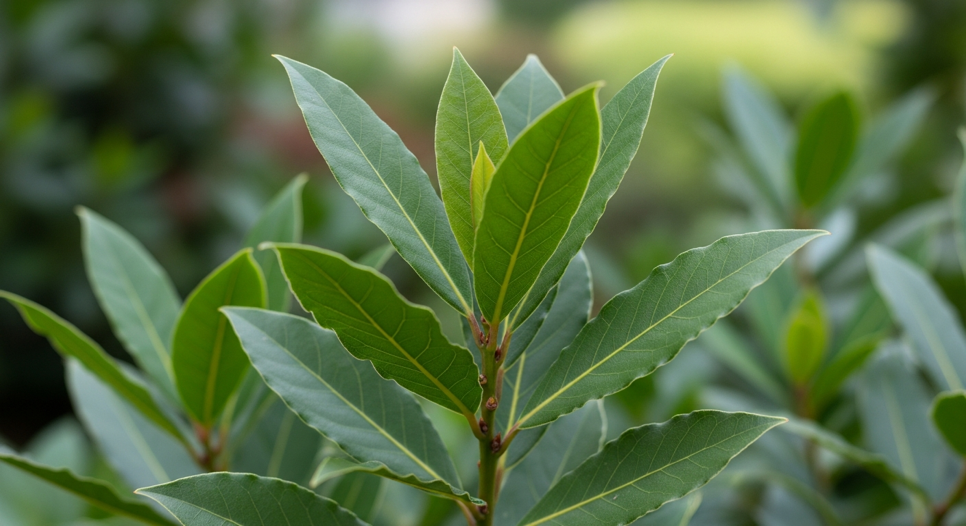
Bay leaf hydrosol (hydrolat) is the aromatic water phase formed at the same time as the essential oil during the steam distillation of the leaves of the Laurus nobilis tree. During distillation the steam carries the volatile compounds from the leaf; once condensed, the oil separates to one side and a scented water remains. That water is the hydrosol.
The difference is bigger than you might think. The hydrosol carries the water-soluble aromatic compounds and a very small amount dissolved from the essential oil, often far below one percent. So next to the intense and sharp form of the essential oil, the hydrosol remains quite dilute and light. Indeed, in one study the lead compound of bay hydrolat was again found to be 1,8-cineole, at roughly 65 percent; but the same research also showed that the hydrolat exhibits markedly lower activity than the essential oil. In bay's own essential oil, 1,8-cineole is accompanied by compounds such as linalool and eugenol.
A Light Water for Skin and Hair: Bay Hydrosol in Cosmetics
This lightness of the hydrosol makes it especially useful in cosmetics. Because it is water-based and gentle, it can go directly into products that rely on a water phase, such as facial toners, facial sprays, serums and masks; it also finds a place in hair tonic, bath and body spray formulations. Bay is already a familiar plant used for centuries in perfume and soap making; the hydrosol carries this aromatic character in a liquid, water-soluble form.
| Area of use | Form of use | Highlighted feature |
|---|---|---|
| Skin care | Facial toner, facial spray, mask | Water-based, light aromatic water |
| Hair care | Hair tonic, scalp spray | Refreshing bay aroma |
| Body and bath | Body spray, bath water | Ready to use, light scent |
There is an interesting contradiction here. The hydrosol is technically the "weak" side of the essential oil: it contains far fewer active compounds, and in measurements its antioxidant and antibacterial effects come out lower than the oil's. So how does a product being this dilute turn into an advantage? The answer lies in where it is used. You cannot spray a concentrated essential oil directly onto your face; but you can spray a light, water-based hydrosol. So what makes the hydrosol valuable is often precisely its gentleness.
From Kitchen to Production: Aroma and Standardization
Bay's scent is no stranger to the kitchen either; from soups to sauces, from pickles to various dishes, it is a classic aroma. Because the hydrosol form offers this familiar bay note in a liquid, water-soluble way, it also finds use on the food aroma side.
But the common condition for all of this is consistency. The composition of a hydrosol changes with the origin of the leaf, the harvest and the distillation conditions. What makes bay hydrosol a reliable raw material is the standardization that comes into play at this point: running the distillation in a controlled way and ensuring that every batch carries the same scent and compound profile. Greenext's approach on the innovative hydrosols side rests exactly here, on keeping the aroma the water carries at the same quality every time.
Frequently Asked Questions (FAQ)
What is the difference between bay hydrosol and bay (essential) oil?
Both come from the same distillation but are different phases. The essential oil is the intense, oil-based part; the hydrosol is the much more dilute water phase that carries the water-soluble aromatic compounds. For this reason the hydrosol is lighter and can be added directly to water-based products.
Is bay hydrosol applied directly to the skin or hair?
Because hydrosols are water-based and dilute, they are often used as a ready-to-use tonic or spray, or in the water phase of a formulation. Unlike the concentrated essential oil, it is treated directly as an aromatic water.
What does bay hydrosol's scent resemble?
The scent is largely determined by 1,8-cineole, which gives a fresh, slightly eucalyptus-like and camphorous character. The intensity of the scent can vary from batch to batch depending on the distillation and harvest conditions.
References
- Laurus nobilis, Salvia sclarea and Salvia officinalis Essential Oils and Hydrolates: Evaluation of Liquid and Vapor Phase Chemical Composition and Biological Activities. Plants (Basel), 2021. https://pmc.ncbi.nlm.nih.gov/articles/PMC8067454/
- Laurus nobilis: Composition of Essential Oil and Its Biological Activities. Molecules, 2017. https://pmc.ncbi.nlm.nih.gov/articles/PMC6152719/


