

Calendula Hydrosol: A Calm Floral Water for Sensitive Skin
Why is the water left behind after a flower is distilled considered one of the gentlest ingredients on cosmetic shelves? And how can this water, despite not being as concentrated as an oil, be used directly in sensitive skin formulations?
The answer lies in the structure that makes calendula hydrosol "light yet functional": it is water-based, gentle and directly applicable. In this article you will discover detailed information about calendula.
From Flower to Water: What Is Calendula Hydrosol?
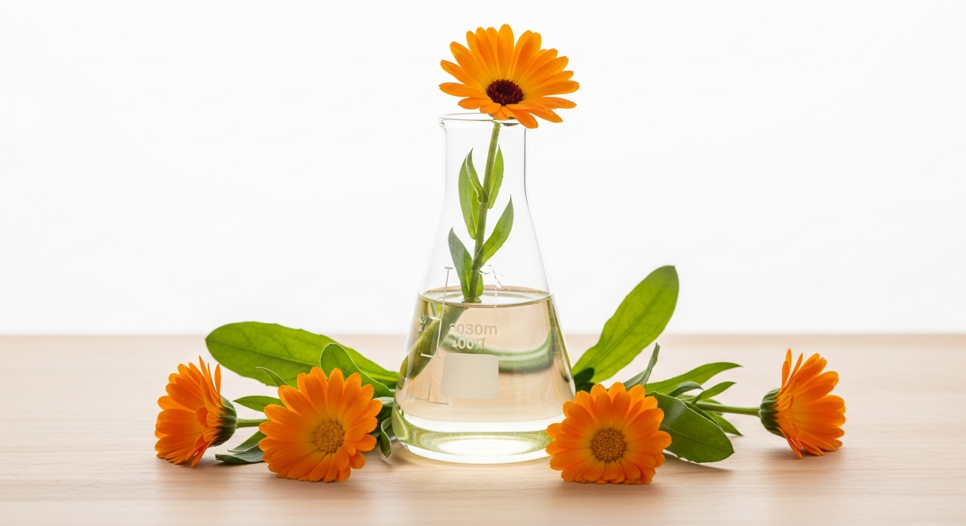
Calendula hydrosol (hydrolate) is the aromatic water phase that emerges during the steam distillation of the flowers of the Calendula officinalis plant. During distillation the steam carries along the water-soluble components of the flower; once it condenses, the oily portion separates and a gently scented water remains. That water is the hydrosol.
Calendula's vivid orange is no coincidence: its colour comes from carotenoids in the plant such as lutein and beta-carotene. But its reputation in cosmetics does not rest on colour alone.
Calendula has a profile rich in flavonoids, triterpenoid compounds and carotenoids, and this profile makes it a long-established soothing botanical ingredient found in roughly two hundred cosmetic formulations.
The hydrosol carries this aromatic character in a far more diluted, water-based form; in other words, unlike a concentrated extract, it remains light enough for products that come into direct contact with the skin.
Soothing Lightness: Calendula Hydrosol in Cosmetics
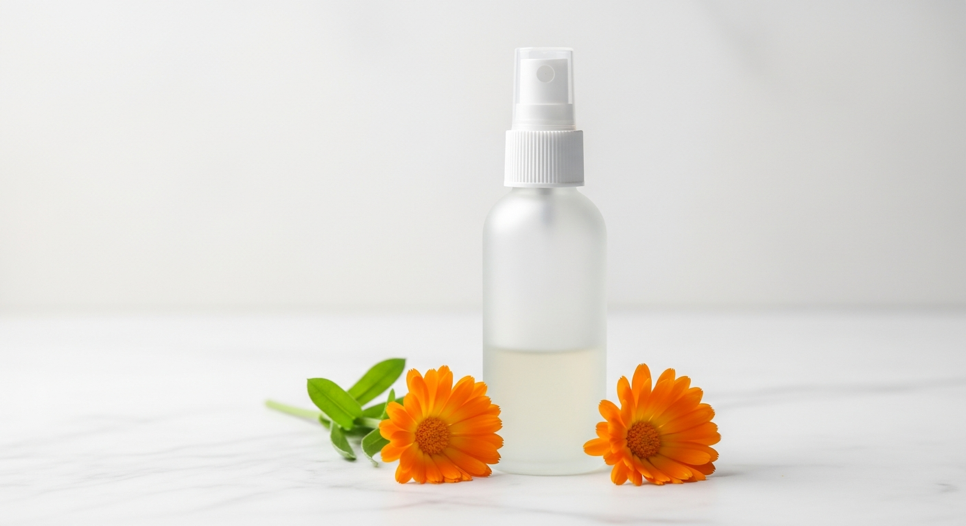
Calendula's best-known aspect in cosmetics is the soothing perception associated with sensitive and irritated skin. The water-based structure of the hydrosol makes it suitable for adding directly to products built on a water phase, such as facial toners, facial mists, masks and serums. The gentle character of the aromatic water is the primary reason it is preferred, especially in formulations aimed at sensitive skin.
| Application area | Form of use | Key feature |
|---|---|---|
| Sensitive skin care | Facial toner, facial mist | Water-based, soothing aromatic water |
| Mask and serum | Water phase ingredient | Gentle floral water profile |
| After-sun care | Refreshing mist | Light, directly applicable |
There is a thought-provoking point here: most of calendula's most valuable components are fat-soluble and are concentrated more in extracts or oily macerates. The hydrosol carries only a small, water-soluble portion of these. So how does such a diluted product gain value?
The answer lies in how it is used: you cannot apply a concentrated extract directly to every skin type, but you can apply a light floral water. What makes calendula hydrosol valuable is very often precisely this gentleness.
From Flower to Product: Production and Standardisation

The composition of a hydrosol varies according to the origin of the flower, the time of harvest and the distillation conditions. What makes calendula hydrosol a reliable raw material is the standardisation that comes into play at this point: running the distillation under controlled conditions and ensuring every batch carries the same scent and component profile. This is also the point that stands out in Greenext's innovative hydrosol approach; turning nature's variable output into a consistent water phase that enters the formulation at the same quality every time.
Frequently Asked Questions (FAQ)
Are calendula hydrosol and calendula extract the same thing?
No. An extract is a more concentrated isolate that includes the plant's fat-soluble components; a hydrosol is the far more diluted water phase from distillation, carrying the water-soluble aromatic compounds. This is why the hydrosol is lighter and can be added directly to water-based products.
Is calendula hydrosol applied directly to the skin?
Because hydrosols are water-based and diluted, they are most often used as a ready-to-use toner or mist, or evaluated within the water phase of a formulation. They are treated as a gentle aromatic water rather than a concentrated isolate.
Which skin type is calendula hydrosol preferred for?
Due to its water-based and gentle structure, it is mostly preferred in formulations aimed at sensitive skin. Even so, it is evaluated as a cosmetic ingredient; it is not a treatment method on its own.
References
- A review on phytochemistry and ethnopharmacological aspects of genus Calendula. Pharmacognosy Reviews, 2013. https://pmc.ncbi.nlm.nih.gov/articles/PMC3841996/
- An Updated Review on the Multifaceted Therapeutic Potential of Calendula officinalis L. Pharmaceuticals (Basel), 2023. https://pmc.ncbi.nlm.nih.gov/articles/PMC10142266/


