

Elderberry Extract: The Dark Mark Left by a Single Drop
When elderberry is added to a drink, why does it leave such a deep, plum-red color? And is it really possible to replace synthetic dyes with this natural color? This is exactly why elderberry extract, the concentrated form of this dark-berried plant, is becoming a favorite of the beverage sector.
Where Does That Dark Color Come From? What Is Elderberry Extract?
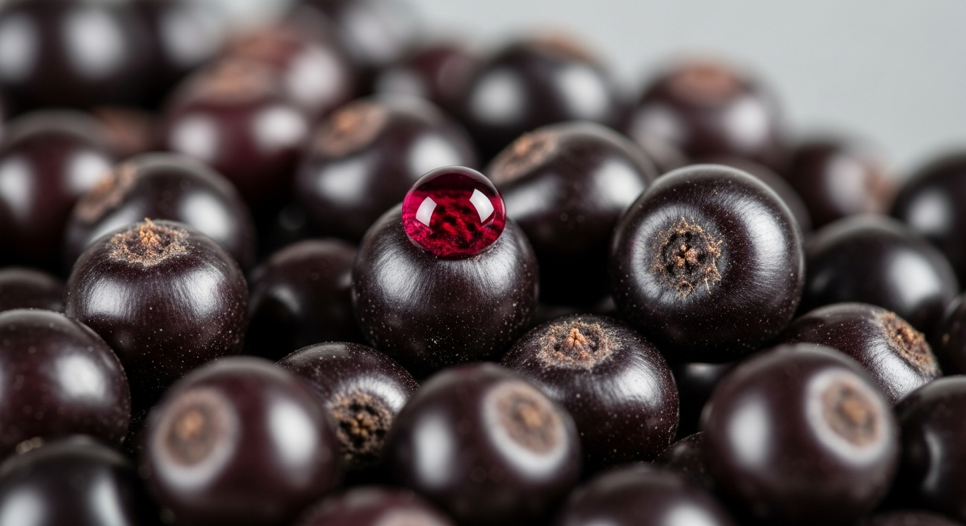
Elderberry extract is a water-soluble concentrate obtained from the dark purple-black berries of Sambucus nigra. Behind that striking color and technical value there is a single word: anthocyanin.
The main anthocyanins in the berry are cyanidin-3-glucoside and cyanidin-3-sambubioside; together these make up about 90% of the total anthocyanins. This makes elderberry a dual-function ingredient: both a strong antioxidant and a raw material used as a natural colorant in the food industry. Moreover, since elderberry has been consumed as syrup and beverages for centuries, it also carries a familiar, natural perception among consumers.
Farewell to Synthetic Dye: Elderberry in Beverages
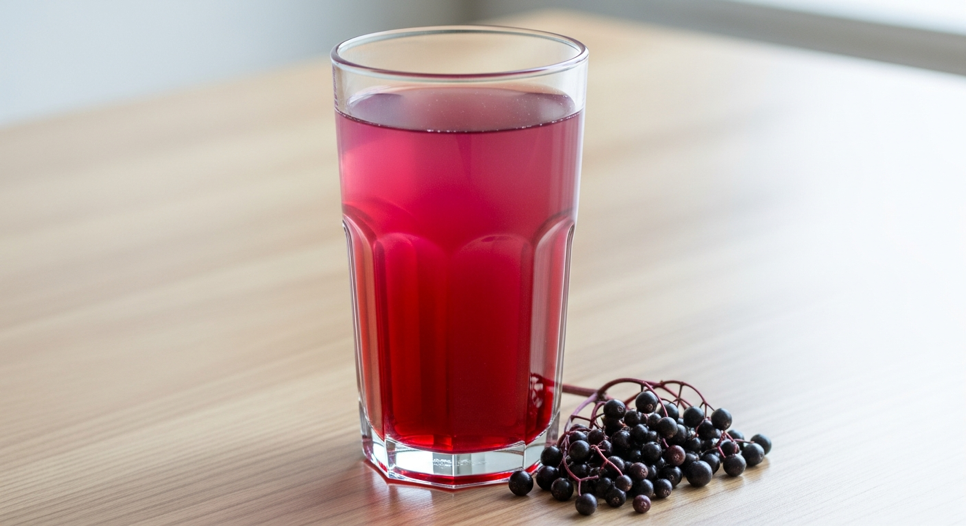
Elderberry's main role in beverages is as a natural colorant. Its anthocyanins give color and add antioxidant value at the same time; this "dual-function" structure makes it a clean-label alternative to synthetic red dyes. The use of anthocyanins as a food colorant (under the code E163) is already defined.
| Beverage form | Purpose | Highlighted compound |
|---|---|---|
| Juice / nectar | Natural red-purple color | Anthocyanin |
| Functional drinks | Antioxidant + color | Anthocyanin, phenolics |
| Carbonated/flavored drinks | Alternative to synthetic dye | Anthocyanin |
More Than a Color: Supplements, Cosmetics and Production
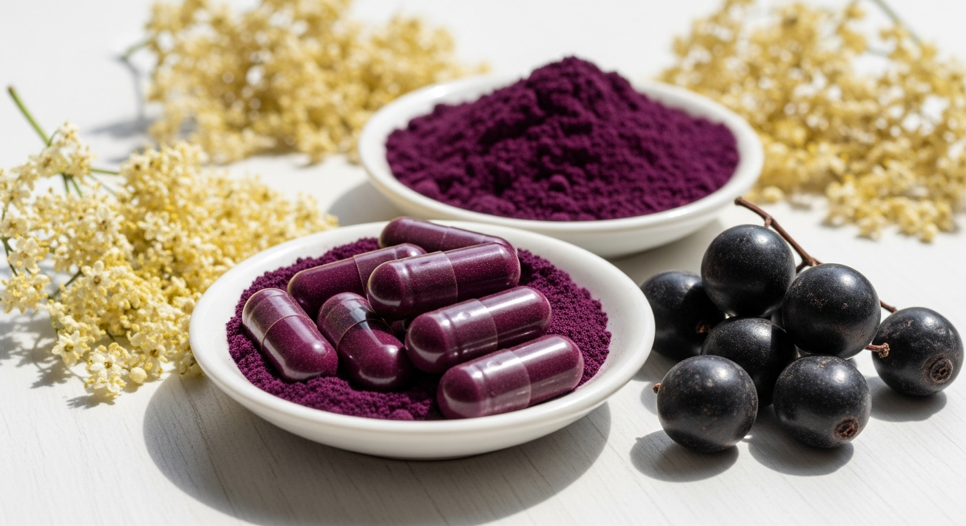
Elderberry is not only a coloring beverage ingredient. On the supplement side, it is evaluated as a botanical active in powder and liquid formulas with an antioxidant profile from its anthocyanin and phenolic content. In cosmetics, Sambucus nigra flower is used as a natural ingredient with refreshing and skin-care functions.
What they all share is production. Because the anthocyanin content of a natural raw material varies with harvest, the real work is turning this variability into a stable, standardized extract; in Greenext's production, this is the step that makes that deep plum color repeatable in every batch.
Frequently Asked Questions (FAQ)
Why is elderberry extract added to beverages as a colorant?
Because the anthocyanins it contains offer a natural, clean-label alternative to synthetic red dyes; the same compound is dual-function, providing both color and antioxidant value.
References
- Bioactive properties of Sambucus nigra L. as a functional ingredient for food and pharmaceutical industry. Journal of Functional Foods, 2020. https://pmc.ncbi.nlm.nih.gov/articles/PMC7185606/
- Anthocyanin Profile of Elderberry Juice: A Natural-Based Bioactive Colouring Ingredient. Food Chemistry, 2019. https://pmc.ncbi.nlm.nih.gov/articles/PMC6650832/


