

Same Plant, Different Analysis Report: How Does an Essential Oil Chemotype Arise?
How can a thyme oil whose GC-MS report lists thymol as the dominant component and another that lists linalool share a single botanical name? Both arrive labelled Thymus vulgaris, both are consistent within themselves, and the concept that explains this picture is called the essential oil chemotype. A plant's taxonomic identity and the identity of the chemistry it produces can diverge under one and the same name.
The Latin Name Does Not Describe the Chemical Profile
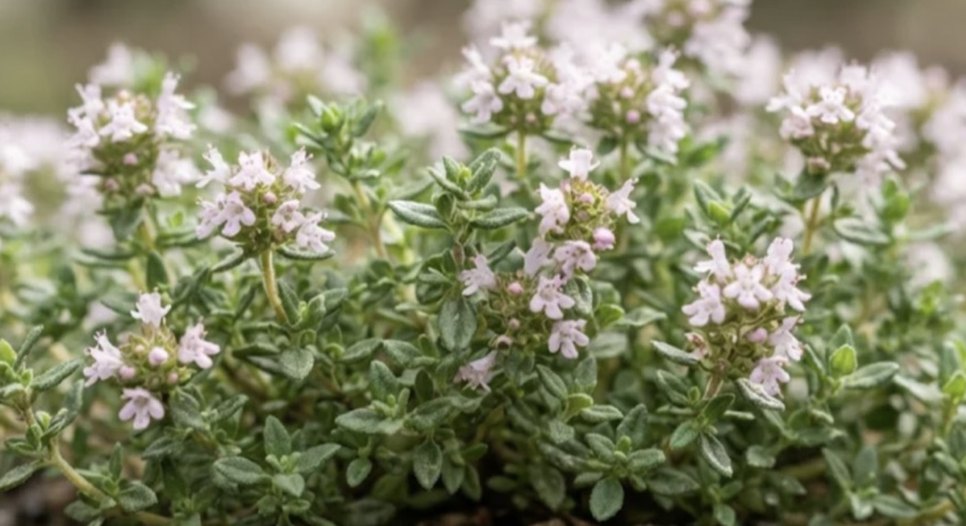
A chemotype is the situation in which plants that morphologically belong to the same species produce markedly different secondary metabolite profiles. Leaf shape, flower structure and taxonomic position are shared; what changes is the step at which the biosynthetic pathway working in the glandular trichomes concentrates. The core of this difference is genetic, and it shows stability at the population level.
Altitude, soil, climate and harvest time shift component ratios, but they do not turn a thymol-dominant plant into a linalool-dominant one. A chemotype is the identity of a profile; seasonal fluctuation moves component ratios up and down without changing that identity. This is also why the term appears so often in commercial documents: the botanical name sits at the upper level of the supply chain, while chemotype information is the lower layer that actually defines the batch.
Six Distinct Signatures in Thyme: A Scale from Thymol to Thujanol
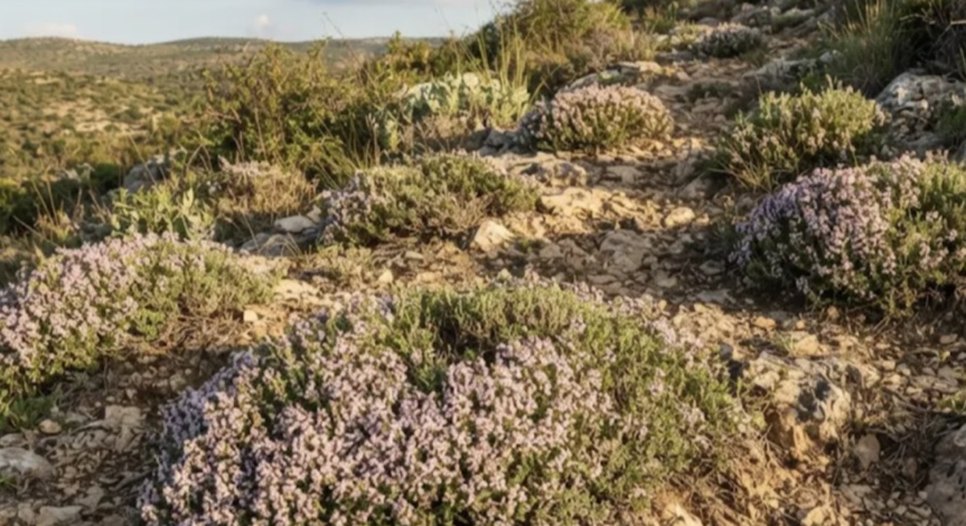
Thymus vulgaris is the textbook example of this subject. Six chemotypes are defined in the species' natural populations, and these types are clearly separated spatially in nature. Two are phenolic: the thymol and carvacrol types sit at the end of the biosynthetic chain, while the remaining four are the geraniol, alpha-terpineol, linalool and thujanol types. In some populations a single type is in the majority, and mixed populations are also common.
The numbers turn around from an unexpected place. In the phenolic chemotypes, the share of the dominant component in the total oil stays significantly lower than in the non-phenolic ones, because the precursors gamma-terpinene and p-cymene remain in the oil at high levels. In the thujanol type, instead of a single dominant component there are four characteristic monoterpenes, and their sum is smaller than the single-component share of the other non-phenolic types. Is an oil's identity determined by the largest percentage in the report, or by the distribution around that percentage? Read on its own, the dominant component ratio makes the distance between two chemotypes of a species look smaller than it is.
In Rosemary, When the Source Changes, So Does the Report
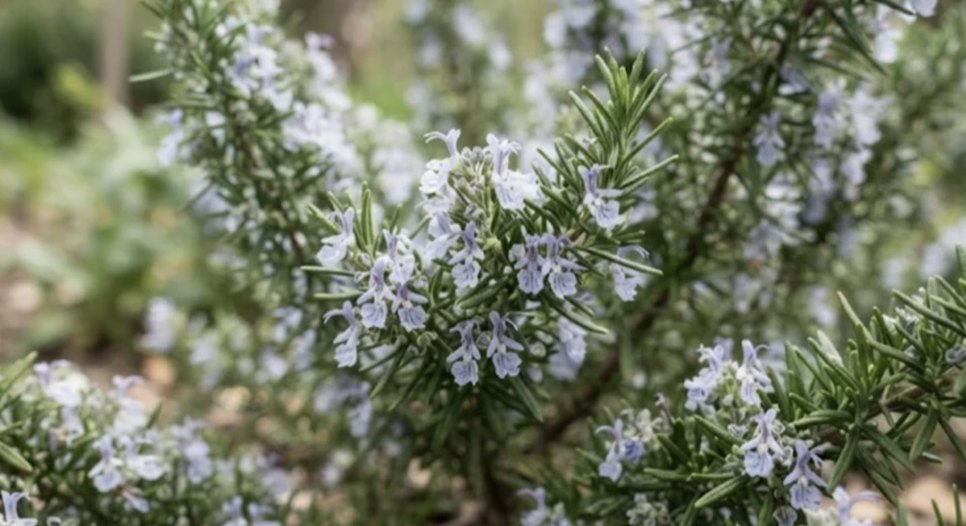
Rosemary, that is Rosmarinus officinalis (Salvia rosmarinus), repeats a similar picture with different components. In a study evaluating six samples from Victoria (Australia), Alabama (USA), Western Cape (South Africa), Kenya, Nepal and Yemen together with literature data, hierarchical clustering reveals five clusters; the clusters are defined not by a single component but by component combinations such as alpha-pinene with 1,8-cineole, or verbenone, camphor and 1,8-cineole. Referring to rosemary in the industry by three types, 1,8-cineole, camphor and verbenone, is a commercial shorthand; cluster-based classifications are more crowded, and the same study reports that at least 13 chemotypes have previously been described in the literature.
As the analysis becomes more detailed, the phrase "rosemary essential oil" carries less and less information. Because the odour profile, stability behaviour and component declaration on the cosmetic and functional food side depend directly on this distribution, every stage that settles for the category name passes uncertainty on to the next step.
In a production that builds its distillation plan around the component profile of the harvested population, two different reports under the botanical name can be read without being confused with each other. In Greenext's essential oil production, profile information travels together with the batch.
Frequently Asked Questions (FAQ)
How is the profile read if the GC-MS report does not state a chemotype name?
In most reports the chemotype name does not appear as a separate line; it is read in the component distribution itself. Which precursors are present alongside the dominant component, and in what proportions, is the real information that defines the profile; in the thymol type, the high shares of gamma-terpinene and p-cymene are an indicator of this.
Why do two batches of the same chemotype give different percentages?
Harvest period, altitude, drying and distillation conditions shift component ratios from batch to batch. In thyme, the dominant component share of a type falls at sites where that type is in the minority. This fluctuation does not mean a change of chemotype; the profile's main component and characteristic precursors stay in place.
Does a cultivar name fix the component distribution?
Cultivar and chemotype describe different levels. A cultivar refers to a line selected through breeding and defined agriculturally, whereas a chemotype refers to chemical variation that is also encountered in natural populations. A cultivar may carry a particular chemotype, but its name does not fix the component distribution by itself.
References
Qualitative and Quantitative Variation in Monoterpene Co-Occurrence and Composition in the Essential Oil of Thymus vulgaris Chemotypes. Journal of Chemical Ecology, 29(4), 2003. PMID: 12775148. https://pubmed.ncbi.nlm.nih.gov/12775148/
Chemotypic Characterization and Biological Activity of Rosmarinus officinalis. Foods, 6(3), 2017. https://pmc.ncbi.nlm.nih.gov/articles/PMC5368539/


