

Why Does an Extract Sample Never Match the Production Batch Exactly?
When a cosmetic or food manufacturer approves the small sample bottle on the desk, how sure can it be that tonnes of extract arriving six months later will carry the same smell, colour and efficacy? This question points to the most frequently skipped part of extract sourcing. Every step between sample approval and production exists to carry the quality of that small bottle into the large batch, and when a shortcut is sought, the problem usually appears right here.
Is the Need Defined by the Effect Before the Plant?
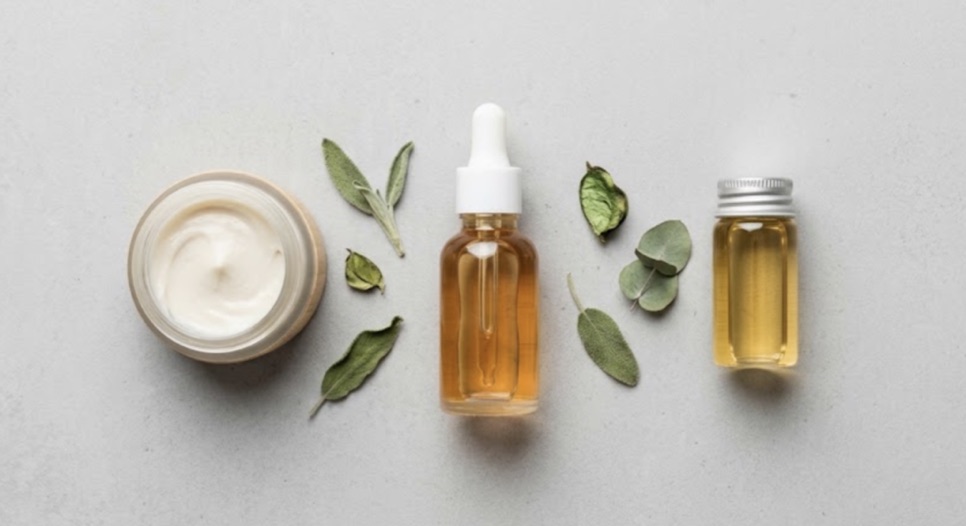
The process often starts with the wrong question. The manufacturer asks "which plant should I use", yet the right starting point is which effect and which product form are targeted. If it is not clear from the start whether a powder blend, a liquid formulation or a water-soluble complex is needed, the correspondence with the supplier keeps changing direction. This is the most frequently skipped step, because a sample is requested directly without defining the need, and the sample that arrives may not fit the formulation at all in terms of solubility or dose range. A clear technical brief, on the other hand, allows the supplier to propose the right extract type and the right standardisation ratio.
What Do the Sample and the Documents Prove, and What Do They Not Prove?
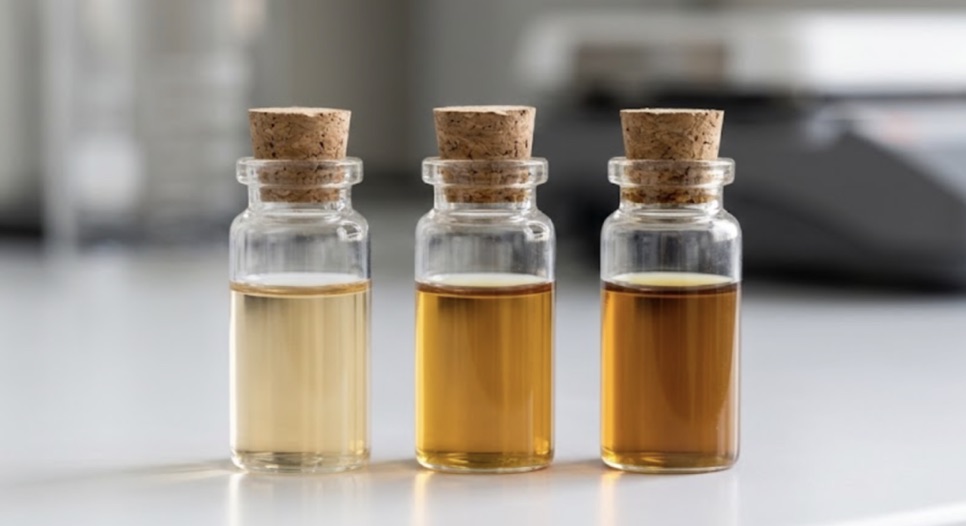
A sample request is accompanied by a certificate of analysis, a safety data sheet, residual solvent information and an allergen declaration, because the sample bottle alone proves nothing. A comprehensive review of botanical extraction shows that every stage, from early steps such as drying and size reduction to the choice of solvent, changes the final profile. Extracts obtained from the same plant with water, alcohol or deep eutectic solvents can carry different component distributions, so the solvent system used to prepare the sample determines formulation compatibility. A laboratory trial tests the accuracy of these documents inside the formulation, and the pilot batch shows whether production can be repeated at small scale. The problem B2B buyers meet most often here is that the sample was prepared under laboratory conditions and does not carry the batch profile that will be used in production. The solvent system carries a separate risk, since the ethanol or glycol based system used in the sample may not be compatible with the buyer's formulation, and this incompatibility only emerges at the trial stage.
So why does a supplier sometimes have to send the same sample twice? Because after the first sample is approved, the formulator asks for a small change, this change affects the solvent ratio or the pH range, and as a result the original approval becomes invalid. This cycle shows that the sample stage is not merely a preference test but a technical verification process.
Why Does Production Not Start Before the Specification Is Tied to a Contract?
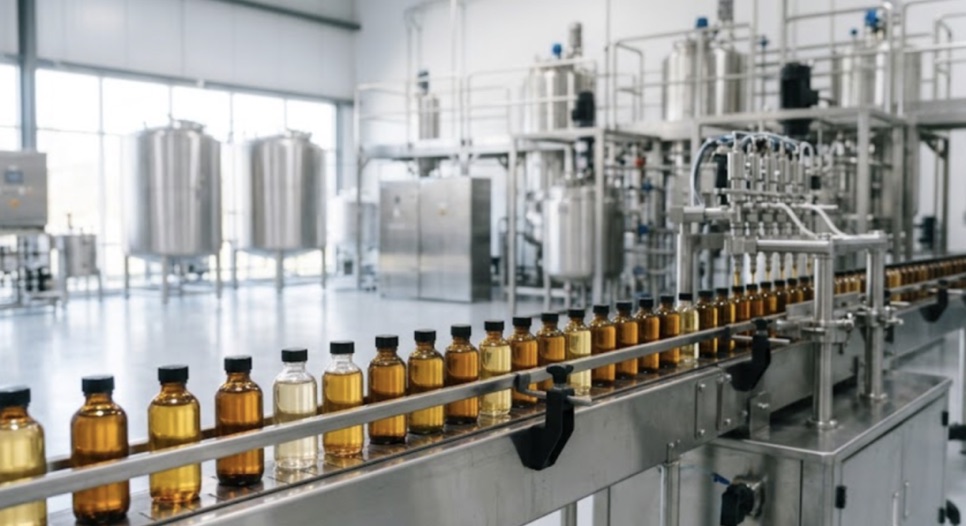
Once the pilot batch has succeeded, the critical step is turning the values measured in that batch into a specification document and attaching it to the contract. If this step is skipped and the order moves to production on verbal approval, the tolerance range within which future batches will be accepted remains unclear. Minimum order quantity, shelf life and the temperature condition during transport also become clear at this point, because an extract looking stable at room temperature does not mean it will stay the same over a long-distance shipment.
| Step | Core Question Asked at This Step | Problem If Skipped |
|---|---|---|
| Defining the need | Which effect and which product form are targeted | Time lost with the wrong extract type |
| Sample and document request | Is there a certificate of analysis and solvent information | Sample incompatible with the formulation |
| Laboratory trial | How does the sample behave in the actual formulation | Unexpected interaction surfacing in the field |
| Pilot batch | Can the small scale be repeated at large scale | A different batch profile in production |
| Specification contract | Is the tolerance range set in writing | Disagreement on batch acceptance |
Frequently Asked Questions
If a difference appears between the approved sample and the production batch, how is responsibility determined?
This is generally determined by looking at the tolerance range in the specification document attached to the contract, so placing an order before the document is prepared leaves a disputed area for later.
Can the pilot batch stage be skipped and production started directly?
Technically it can, but this carries the risk that a deviation not visible at laboratory scale is noticed directly in the large batch.
Why is the minimum order quantity so important in extract sourcing?
Because some extraction lines give different yield and homogeneity results when run below a certain lower limit, which affects quality as much as price.
The pilot batch is the step most often skipped in the sourcing process, yet it is the only place where the difference between the sample and the delivery can be seen. At Greenext, pilot batch data is kept for every order and production batches are compared against this data.
References
Heinrich, M. et al. Best Practice in the Chemical Characterisation of Extracts Used in Pharmacological and Toxicological Research: The ConPhyMP Guidelines. Frontiers in Pharmacology, 2022. https://pmc.ncbi.nlm.nih.gov/articles/PMC9514875/
Kumar S, et al. A Deep Dive into Herbal Extraction: Techniques, Trends, and Technological Advancements. South African Journal of Botany, 2026. https://pmc.ncbi.nlm.nih.gov/articles/PMC12916026/


