

Garlic Extract: The Compound Released the Moment You Cut It
Why does that sharp smell suddenly appear the instant you cut and slice a clove of garlic? A whole clove is almost odorless, yet the moment the knife touches it a powerful aroma spreads everywhere. Where does it come from? The answer hides in a small chemical reaction that makes garlic more than an ordinary kitchen ingredient. Garlic extract, which carries the products of this reaction into a standardized form, is a plant-based ingredient used in many areas from food supplements to cosmetics.
What Happens When You Cut Garlic? What Is Garlic Extract?
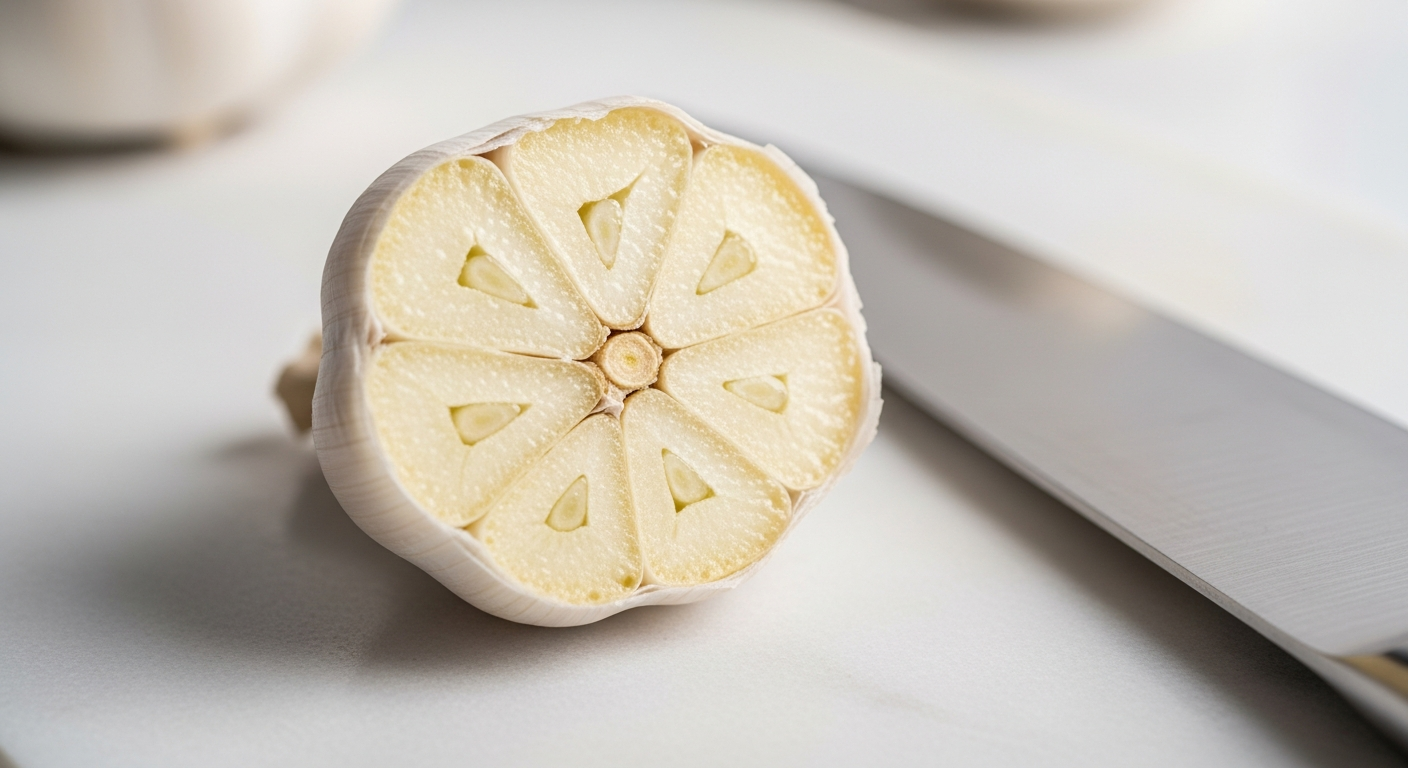
A whole garlic clove is almost odorless, because the compound behind that familiar smell is not there yet; it waits in two separate parts inside the cells. On one side a sulfur compound called alliin, on the other an enzyme called alliinase. The moment you cut or crush the garlic, the cells rupture, the two meet, and within seconds allicin is released. That pungent smell is allicin.
Garlic extract is essentially the standardized version of this chemistry. The main active compounds of Allium sativum are organosulfur, that is, sulfur-containing compounds: alliin, allicin, ajoenes and allyl sulfides. Alongside them are water-soluble and far more stable compounds such as S-allylcysteine. What they all share is being studied for their antioxidant properties. The extract's job is to bring these compounds together in a controlled and repeatable way.
From Powder to Capsule: Garlic Extract in Food Supplements
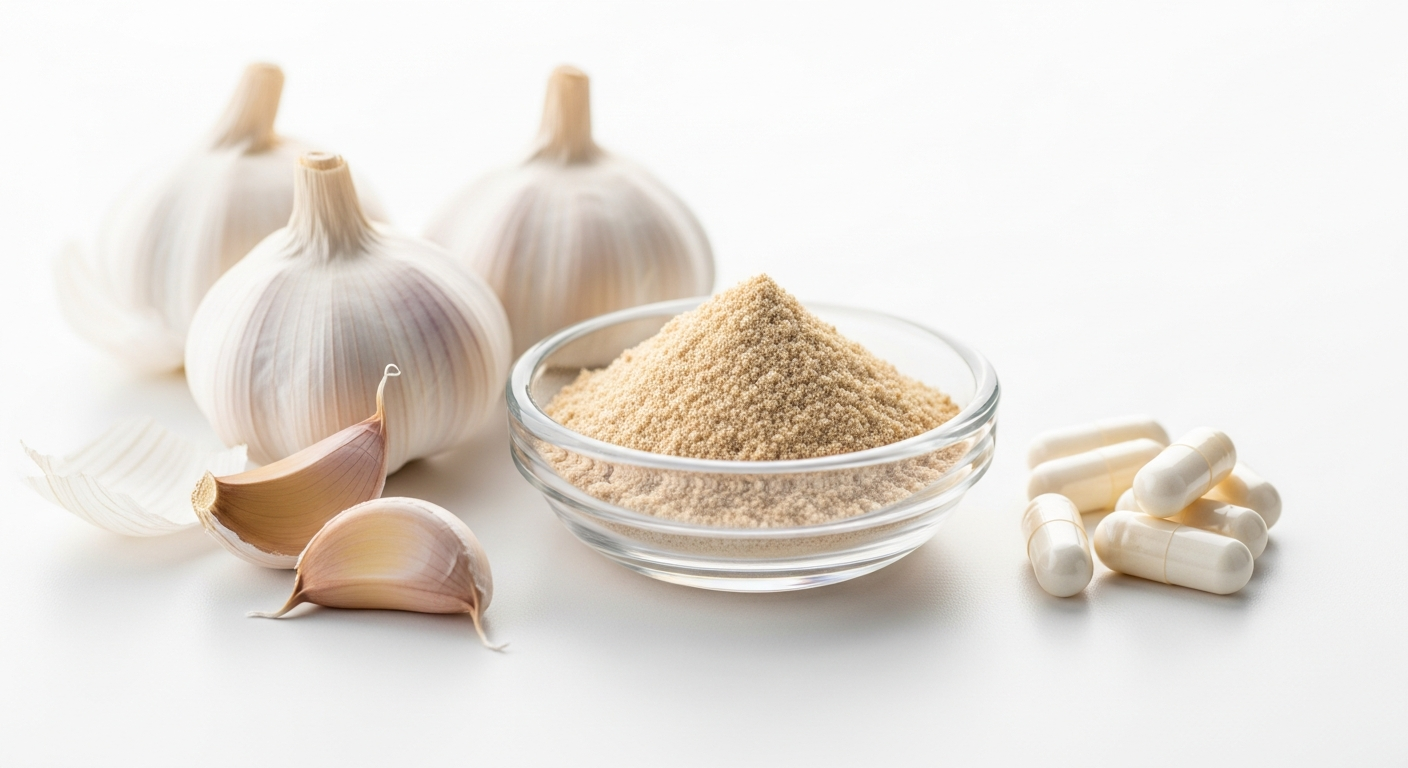
The most common use of garlic extract is food supplements. In powder, tablet and capsule products it appears as a plant active with a defined alliin or allicin potential. The producer's real concern here is clear: to deliver garlic's active compounds without degrading them, to control the odor, and to offer the same content in every batch.
| Form | Highlight | Content |
|---|---|---|
| Powder extract | Standard content, easy formulation | Alliin / allicin potential |
| Tablet and capsule | Enteric coating, controlled release | Organosulfur compounds |
| Aged extract | Reduced odor, stable structure | S-allylcysteine |
Here is the curious part: allicin, garlic's most talked-about compound, is also its most unstable. Its half-life in oil is almost an hour; with heat and time it quickly turns into other compounds. S-allylcysteine, by contrast, can stay almost unchanged for a year at room temperature. So how does a supplement protect such a fragile molecule on the shelf? The answer often lies in the formulation and the production method: a properly processed extract either protects the unstable compound or brings its more stable derivatives to the fore.
Garlic Extract in Hair and Skin Care
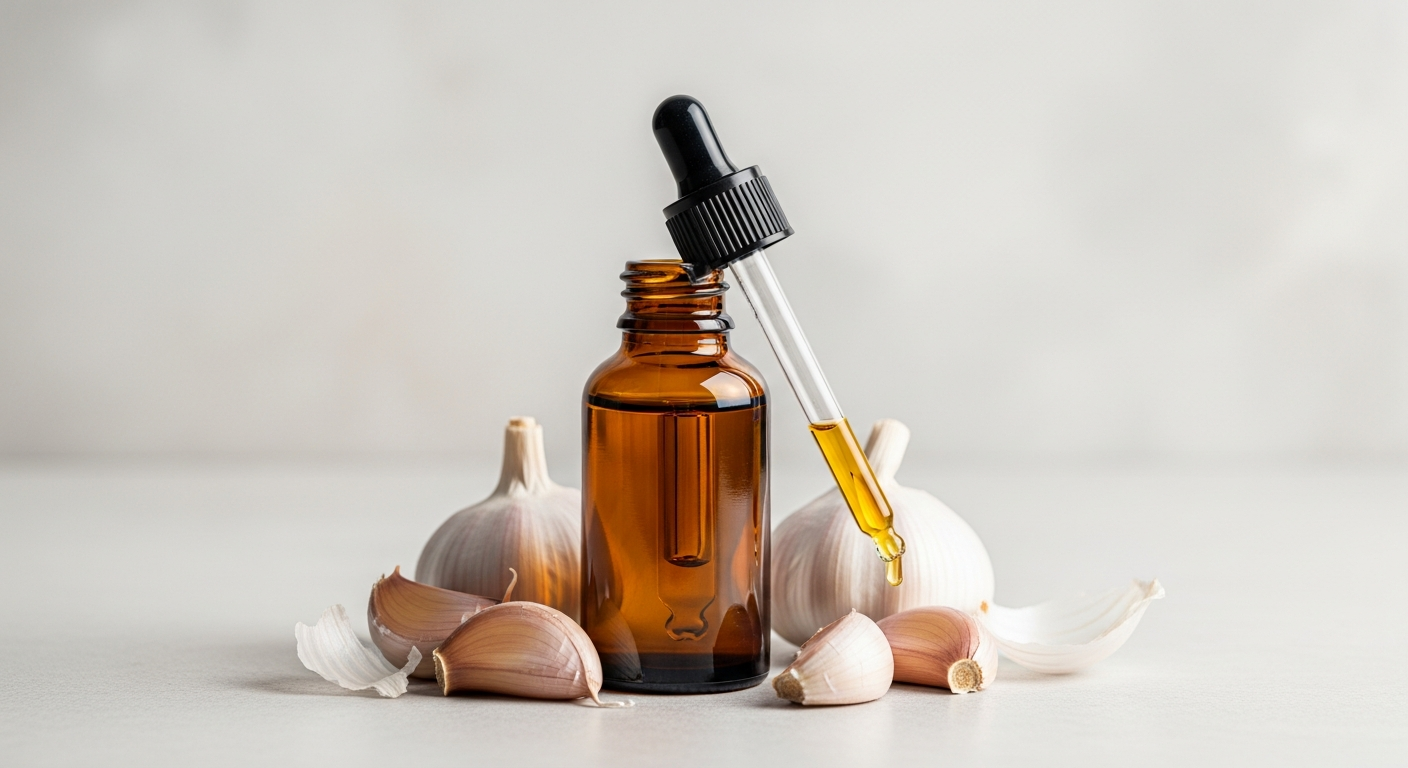
Another area where garlic draws interest is cosmetics. In hair and scalp care products it is used as a plant-based ingredient. The appeal comes from garlic's natural organosulfur and antioxidant profile. As in food, the core issue is the same: carrying the compound in a stable and standardized form.
On the production side, garlic extract is mostly turned into a powder by spray drying; this method provides both stability and ease of use. These methods also form the basis of Greenext's production technology portfolio. Because the compound content of a natural raw material varies with harvest and processing, standardization is the step that determines the repeatability of quality.
Frequently Asked Questions (FAQ)
Can garlic extract be odorless?
It can. In aged garlic extract, the allicin responsible for the pungent smell largely converts into more stable and odorless compounds such as S-allylcysteine. That is why reduced-odor extracts are often preferred in supplement formulations.
Why does allicin degrade quickly, and how is it preserved?
Allicin is an unstable molecule; it converts rapidly, especially in oil and under heat. For this reason, proper drying and storage methods, or favoring its more stable derivatives over allicin, are preferred in extract production.
Why is garlic extract used in hair care products?
Garlic's organosulfur and antioxidant compounds make it an interesting natural ingredient in hair and scalp cosmetic formulations. Here too, the decisive factor is presenting the compound as a standardized and stable extract.
References
- Antibacterial Properties of Organosulfur Compounds of Garlic (Allium sativum). Frontiers in Microbiology, 2021. https://pmc.ncbi.nlm.nih.gov/articles/PMC8362743/
- Composition, Stability, and Bioavailability of Garlic Products Being Used in a Clinical Trial. PMC, 2008. https://pmc.ncbi.nlm.nih.gov/articles/PMC2584604/


