

What Does the Polyphenol Percentage in Green Tea Extract Tell, and What Does It Hide?
Why are two green tea extract quotations from the same plant priced so differently? One says "40% polyphenols", the other says "98% EGCG", and the price differs many times over. Yet both come from the leaf of Camellia sinensis. This label confusion met when buying green tea extract actually comes from a single question: which layer is being measured?
Are Polyphenols, Catechins and EGCG Being Confused?
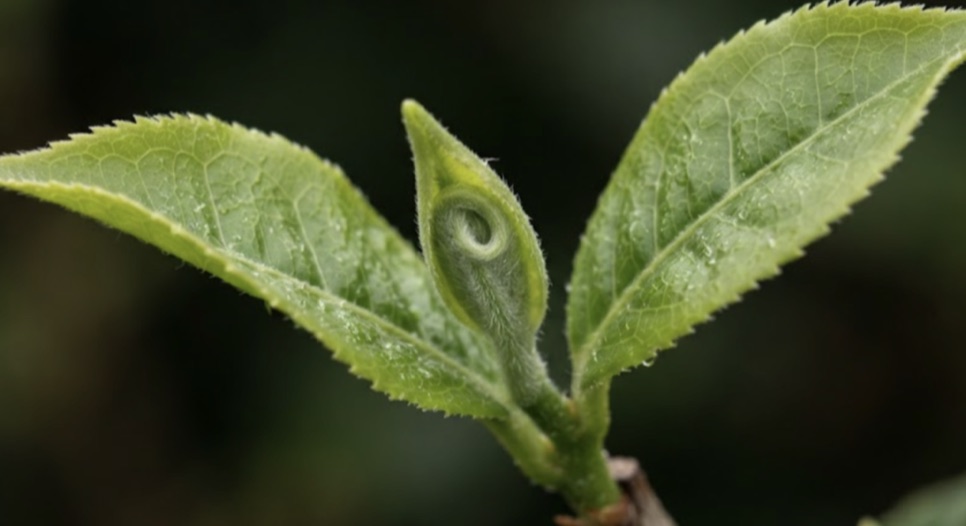
In a green tea extract specification, three different levels are nested within each other. The widest layer is total polyphenols, covering all the phenolic compounds in tea; flavonols, phenolic acids and catechins sit inside this broad family. Beneath it lies the total catechin group, the sum of several molecules such as EGC, EC, ECG and EGCG. The narrowest and most valuable layer is EGCG on its own, that is epigallocatechin-3-gallate. The figure one supplier calls "polyphenols" and the figure another supplier calls "EGCG" are not on the same scale, and comparing them is like putting apples next to pears. The formulator's work starts here, because without knowing which molecule carries the efficacy claim, choosing the right specification is not possible. Looking only at the percentage in the purchasing process means, in effect, not noticing which question has not been asked.
How Does the Analytical Method Change the Result?
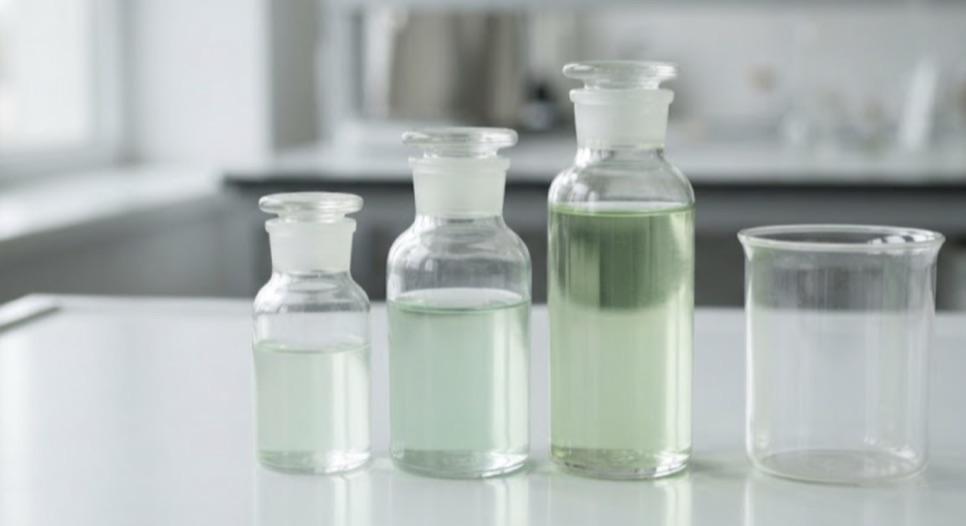
The same extract sample can give a different number depending on the instrument used to measure it. Colorimetric methods, for example the Folin-Ciocalteu test, react with all the reducing substances in the sample and read a total colour intensity. HPLC, on the other hand, separates and counts each molecule individually, and therefore reports EGCG independently of the other catechins. The academic literature has shown that Folin-Ciocalteu results come out close to HPLC values but generally equal or slightly lower, whereas older colorimetric methods such as ferrous tartrate can deviate markedly from HPLC. It has been noted that this deviation grows even larger especially in heavily processed tea types such as matcha and gyokuro, and that the classical coefficients do not fully fit current varieties. If the method line is empty in a certificate of analysis, it becomes difficult to know on which scale that figure stands.
So which line should a formulator look at when two separate supplier certificates are on the table? If the methods differ, the numbers have not been drawn with the same ruler in the first place. Where the analytical method is not part of the specification, a figure on its own carries no meaning.
How Does a Standardisation Label Carry Into the Formulation?
| Specification Wording | What It Measures | Meaning in the Formulation |
|---|---|---|
| 40-60% polyphenols | Total phenolic compound group | General antioxidant support, broad-spectrum use |
| 90-98% total catechins | Sum of EGC, EC, ECG, EGCG | More concentrated catechin profile, food supplement formulation |
| 40-98% EGCG (HPLC) | A single molecule, specifically epigallocatechin-3-gallate | Targeted efficacy claim, high-cost raw material |
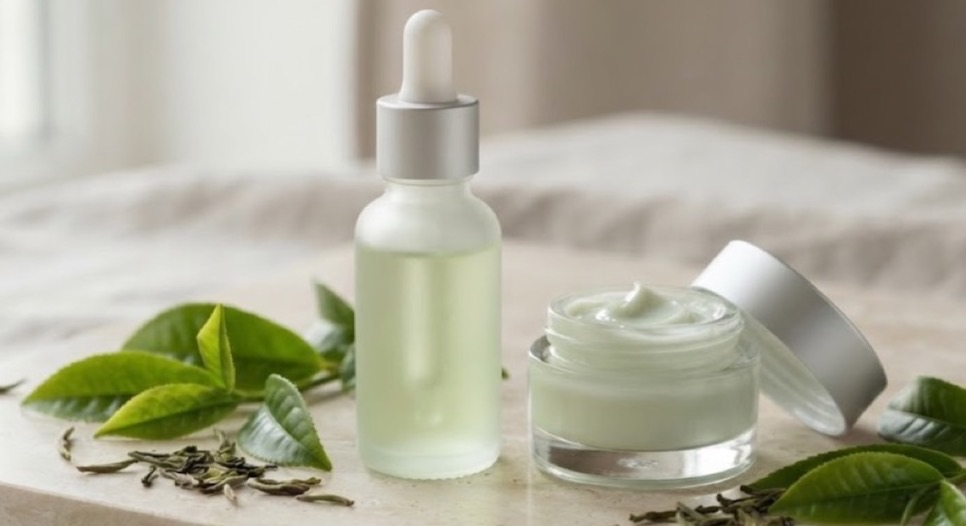
The literature has shown that EGCG and ECG together make up roughly 87-95% of the total catechin content, which explains that EGCG is the dominant molecule in green tea but should not be confused with the total catechin figure on its own. The same study also noted that the total amount of catechin derivatives in green tea came out markedly higher than in white tea, and that this is related to the shortness of the processing time. If a formulator assumes that "98% catechins" and "98% EGCG" are the same, the amount of active substance in the recipe is miscalculated and the cost comparison also rests on a faulty basis.
Frequently Asked Questions
Can an extract containing 40% polyphenols replace an extract containing 98% EGCG?
No, the two measure different layers. While 40% polyphenols expresses a broad group of compounds, 98% EGCG shows the concentration of a single molecule, and depending on the formulation target each is preferred for a different purpose.
What does it mean if the analytical method is not written on the certificate?
A number without method information is not comparable, because colorimetric and HPLC results can differ even on the same sample.
Does an extract with a high total catechin ratio always contain more EGCG?
Not necessarily. The total catechin figure is the sum of several molecules, and the EGCG share varies with the variety, the processing method and the harvest season.
The catechins in the green tea leaf are sensitive to heat and oxidation, so temperature control during extraction and drying directly affects standardisation consistency. When reading a specification, the method line matters as much as the percentage itself.
References
Matsushita T, Honda T, Nakamura T, Kumazawa S. Comparison of Colorimetric Methods for the Analysis of Total Polyphenols in Green Tea Extracts. Bioscience, Biotechnology, and Biochemistry, 2024;88(7):798-803. https://pubmed.ncbi.nlm.nih.gov/38702849/
Paiva L, Rego C, Lima E, Marcone M, Baptista J. Comparative Analysis of the Polyphenols, Caffeine, and Antioxidant Activities of Green Tea, White Tea, and Flowers from Azorean Camellia sinensis Varieties Affected by Different Harvested and Processing Conditions. Antioxidants (Basel), 2021. https://pmc.ncbi.nlm.nih.gov/articles/PMC7912137/


