

Why Is ISO 22716 Asked of a Cosmetic Raw Material Supplier?
Why does a guideline written for the manufacture of the finished cosmetic product come knocking at the door of a plant that produces extracts? ISO 22716 is one of the headings companies buying cosmetic raw materials look for in a supplier file; the text of the standard, meanwhile, describes the production, control, storage and shipment of the finished product. A botanical extract, hydrosol or essential oil plant does not fall squarely in the middle of that description. If the request comes all the same, it is reasonable to think that what is being asked for is somewhat more than a photocopy of a certificate.
Where the Scope of ISO 22716 Begins and Ends
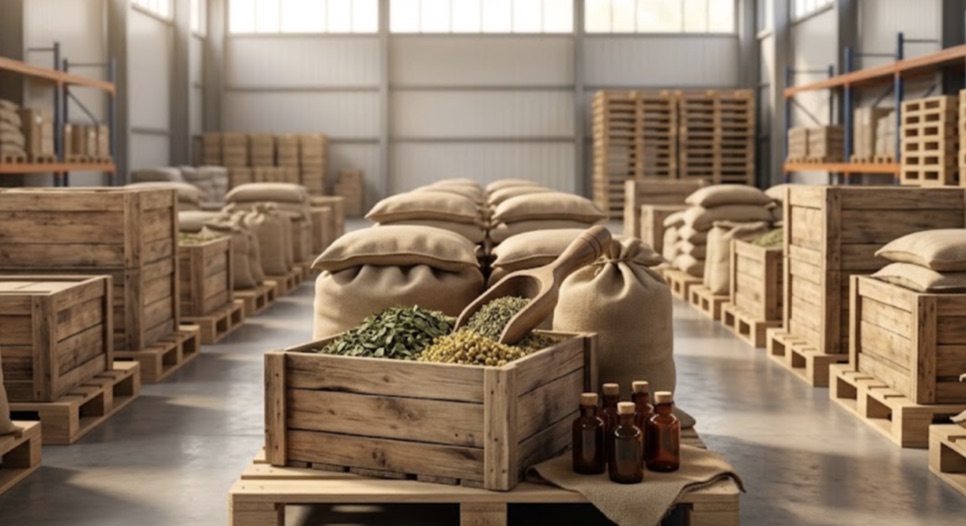
The standard is a Good Manufacturing Practices guideline for cosmetic products; it leaves research and development activities and the distribution of the finished product outside its scope. It addresses personnel, premises, equipment, cleaning and sanitation, storage, production, quality control, quality assurance, subcontracted work, complaints and recalls, internal audit and documentation under separate headings; Turkey's cosmetic Good Manufacturing Practices guideline likewise defines internal audit as a section of its own. The striking point is that raw materials are taken as the beginning of production: purchase from an approved supplier, recording the integrity of the packaging on delivery, and holding in quarantine until quality control approval are steps the standard describes within itself.
On the European side the picture is similar. Products within the scope of the Cosmetic Products Regulation (1223/2009) must be manufactured in compliance with Good Manufacturing Practices; because EN ISO 22716:2007 is published as a harmonised standard under that regulation, a presumption of conformity is granted to anyone producing in accordance with it. The standard itself hands out no paper to anyone: conformity is demonstrated through the manufacturer's own records and internal audit system, and third-party certification is a widespread market practice rather than a legal obligation. Because responsibility accumulates on the party placing the product on the market, the question travels back down the chain.
Where the Difference Between Two Batches Is Recorded
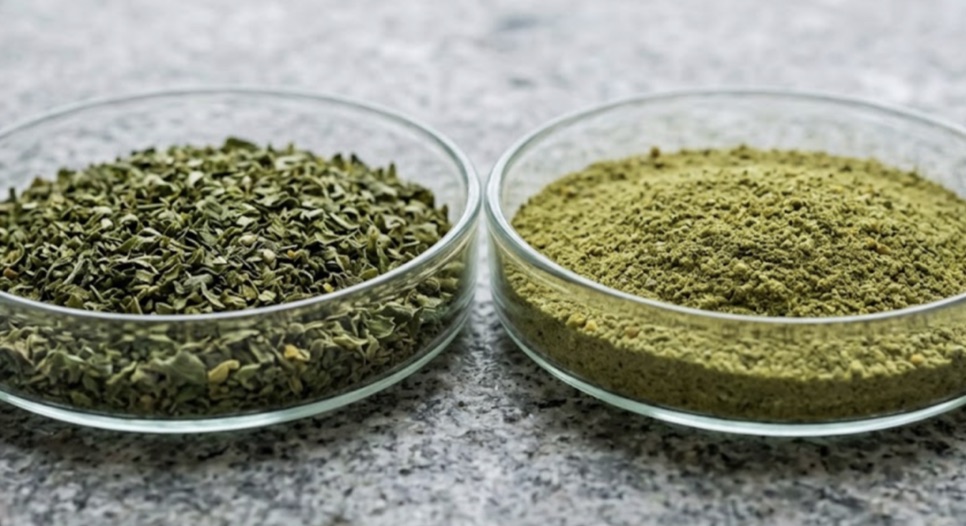
Incoming control is the business of deciding whether the material that has arrived will be accepted. The buyer looks at the analysis result, but an analysis represents a single sample. What speaks for the batch as a whole is the record of how that batch was produced: which plant lot it came from, which equipment processed it, when cleaning verification was carried out, and how any deviation was closed.
The scene at the audit table is often this: the auditor sets the certificate aside, asks for the batch records of the last three shipments and compares those records with the delivery notes. An extract that occupies one percent of a formulation by mass can generate the thickest section of the file. The weight the audit measures does not come from the formulation; as more can be said about an input, its share of the file grows.
| GMP heading | At the finished product manufacturer | Equivalent at the raw material producer |
|---|---|---|
| Raw material acceptance | Incoming control, quarantine practice | Batch-level production and analysis record |
| Deviation management | Segregation of the non-conforming batch | Recording the process change |
| Internal audit | Periodic self-assessment | Testing the record chain within itself |
| Documentation | Product information file | Specification, certificate of analysis, storage record |
Variability is natural in botanical inputs. In species such as Salvia officinalis or Melissa officinalis, marker constituent ratios shift from batch to batch according to the conditions between field and still. That shift is no surprise to producers; what is surprising is when the shift is written down nowhere. A known variability can be accommodated in formulation, while an unrecorded variability only shows itself in the finished product.
A Record Outlives the Batch It Belongs To
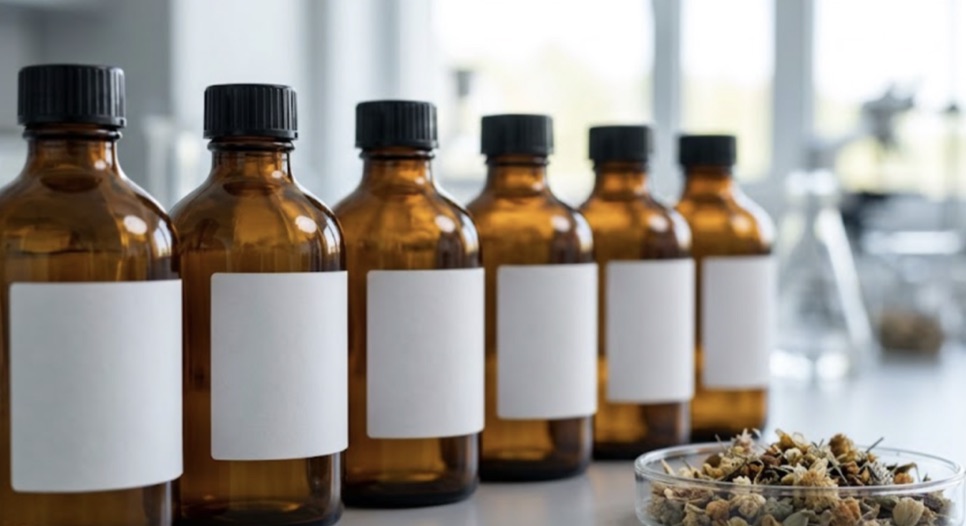
The real issue is not only that the record exists but that it is continuous. When the plant lot, the production parameter, the analysis result and the shipment information are not tied to one another, what remains are individually correct papers with a broken chain. Turkey's cosmetic Good Manufacturing Practices guideline requires samples taken from starting materials to be kept for at least two years from the release of the product. The period belongs to the sample, but it also shows when the question may be asked: for the same batch, both the sample and the record remain answerable for two years.
For that reason ISO 22716 is frequently read on the cosmetic raw material side less as a document check than as an indicator of record discipline. The existence of a certificate and the readability of the same batch's record years later are separate things, and it is the second that is really tested in an audit. In Greenext's extract, hydrosol and essential oil production the plant lot, the process record and the analysis result are linked to one another under the same batch number. Questions arriving after shipment are also worked through from that number.
Frequently Asked Questions (FAQ)
Is asking a botanical extract supplier for ISO 22716 based on legislation?
Legislation ties the Good Manufacturing Practices obligation to the manufacturer of the finished cosmetic product and to the party placing it on the market; it creates no direct obligation for the raw material producer. The request generally comes from the buyer's own supplier approval procedure.
Does a certificate of analysis take the place of the batch production record?
A certificate of analysis shows the measured values of a batch; it does not show the conditions under which that batch was produced. In audits the two are mostly requested together, because one states the result and the other how the result came about.
Is a supplier holding an ISO 9001 certificate considered sufficient for ISO 22716?
ISO 9001 is a sector-independent quality management system standard. ISO 22716 details headings specific to cosmetics such as hygiene, contamination control, batch records and internal audit. There is overlap, but no equivalence.
References
EN ISO 22716:2007 Cosmetics: Good Manufacturing Practices (GMP): Guidelines on Good Manufacturing Practices (ISO 22716:2007), listed as a harmonised standard under the Cosmetic Products Regulation 1223/2009. European Commission, Harmonised Standards: Cosmetic products, accessed 2026. https://single-market-economy.ec.europa.eu/single-market/goods/european-standards/harmonised-standards/cosmetic-products_en
Kozmetik İyi Üretim Uygulamaları Kılavuzu. Turkish Medicines and Medical Devices Agency, 2015. https://www.titck.gov.tr/PortalAdmin/Uploads/UnitPageAttachment/90bT8er1.pdf


