

Juniper Extract: The Essence of a 'Berry' That Is Not Really a Berry
Those blue-purple beads on juniper branches are not, botanically, berries at all. So why does the essence of this structure we take for a fruit show up in so many products, from shampoo to spice blends? The answer lies in what makes juniper extract a valuable botanical raw material.
Berry or Cone: What Is Juniper Extract?
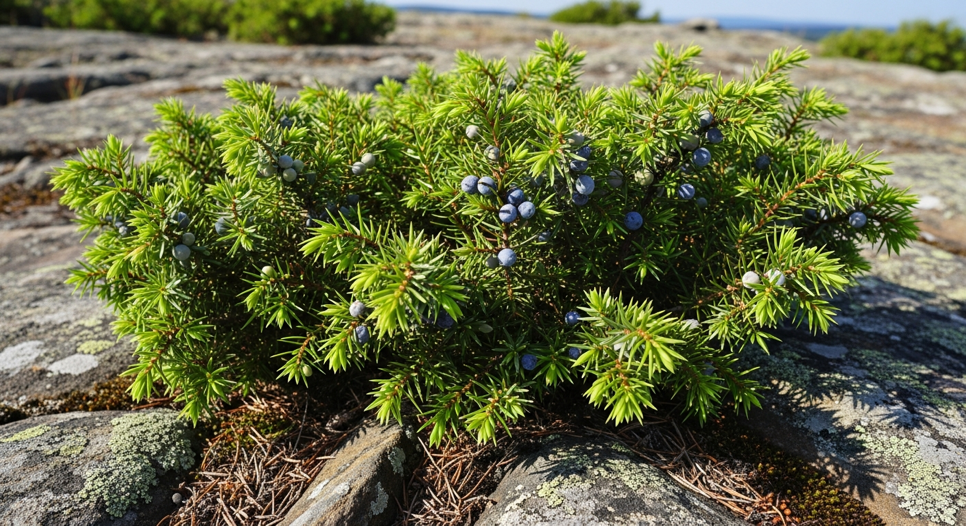
Juniper extract is a natural plant essence obtained from the berry-like seed cones of the Juniperus communis plant. What we commonly call a "juniper berry" is in fact a fleshy female cone made of merged scales, known in botany as a galbulus, and it often takes two to three years to ripen. The cones are processed with suitable extraction methods; the resulting essence is combined with carriers such as water or glycerin to suit the formulation. So what emerges is not the concentrated form of the essential oil, but a plant extract taken into a carrier. So is a plant's essence recognized by its scent, or by the dissolved compounds it carries?
From Scent to Compound: What Is Inside Juniper Extract?
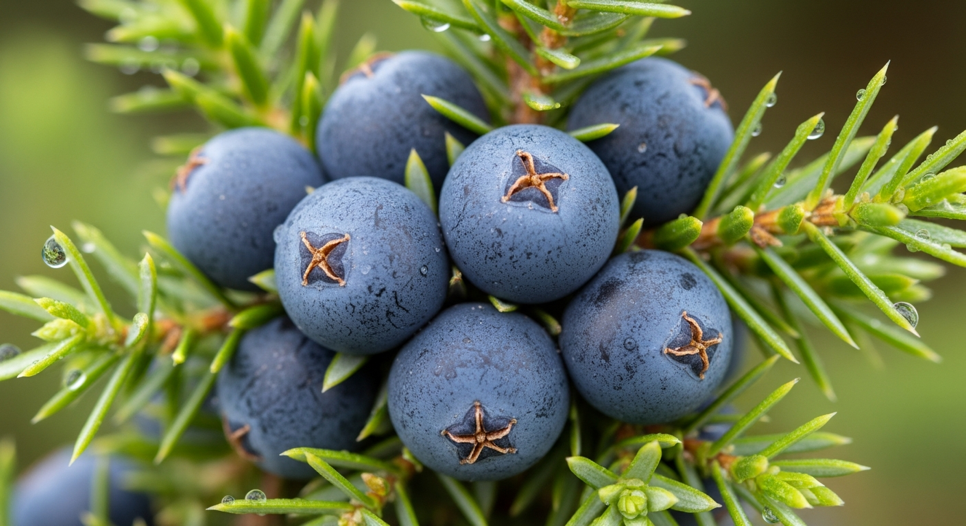
Behind juniper's familiar resinous scent are largely monoterpenes; the dominant compound in juniper berry essential oil is α-pinene, whose level at times exceeds fifty percent. A technical distinction matters here: these volatile molecules that give the scent do not alone define the mass of an extract taken into water and glycerin. On the extract side, phenolic compounds such as catechin and ellagic acid stand out; research has examined juniper berry and leaf extracts for these polyphenols and found that the composition changes markedly with the source. In short, the essential oil and the water or glycerin extract from the same plant carry different compound profiles.
| Dimension | Juniper Essential Oil | Juniper Extract (water/glycerin) |
|---|---|---|
| Dominant compound | Monoterpenes, mainly α-pinene | Phenolics, catechin and ellagic acid |
| Phase and solubility | Fat-soluble, water-free | Mixes with water and glycerin |
| Character | Intense resinous scent | Light, carrier-based essence |
| Typical use | Perfume and aroma, concentrated | Cosmetic and food formulations |
From Cosmetics to Beverages: Where Is Juniper Extract Used?
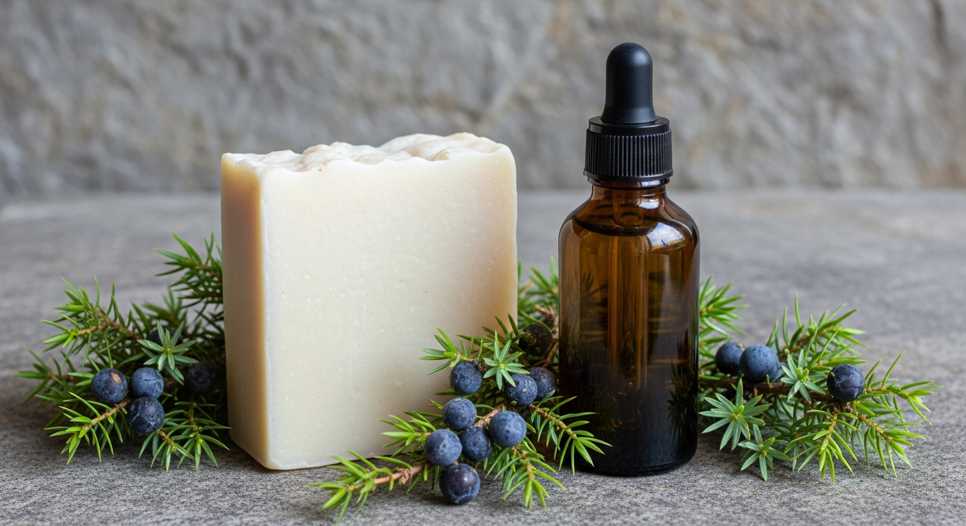
Juniper extract is preferred in cosmetic and personal care products that seek a natural botanical ingredient: shampoos, hair care products, skin care products, facial cleansing products, soaps, and men's care and beard care products. On the food and beverage side, juniper berry and its extract can be evaluated, within suitable regulation and use conditions, in herbal tea blends, spice blends, and functional food and beverage development. Greenext produces juniper extract with different solvent systems and technical specifications according to the needs of different sectors; so the raw material is shaped by the target application rather than a single standard. Suitability and use ratios in the final product are then evaluated separately according to the regulation of the target country and the product category.
Frequently Asked Questions (FAQ)
Are juniper extract and juniper essential oil the same thing?
No. Both come from the juniper berry but they are different. The essential oil is the intense, fat-soluble part rich in monoterpenes such as α-pinene; the extract is an essence taken into carriers such as water or glycerin, standing out for its phenolic compounds, and it enters water-based formulations more easily.
In which sectors is juniper extract used?
Primarily in cosmetics and personal care, and also, within suitable regulation, on the food and beverage side. Alongside shampoo, soap, skin and hair care, it is evaluated in tea and spice blends and in functional product development.
Is juniper extract a medicine or a treatment product?
No. Juniper extract is a botanical raw material used in cosmetic and food formulations; it is not regarded as a medical product or a treatment method.
References
- Phytochemical Characterization and Antibacterial Activity of Albanian Juniperus communis and Juniperus oxycedrus Berries and Needle Leaves Extracts. Antioxidants (Basel), 2024. https://pmc.ncbi.nlm.nih.gov/articles/PMC10968248/
- Chemical Composition and Antioxidant Properties of Juniper Berry (Juniperus communis L.) Essential Oil. Antioxidants (Basel), 2014. https://pmc.ncbi.nlm.nih.gov/articles/PMC4665443/


