

Lemon Balm Extract: The Lemon-Scented Leaf, Brought Into the Formula
Lemon balm leaves leave a fresh, lemon-like scent when you rub them between your fingers. So how does that familiar character get carried into a cream or a beverage? The answer lies not in the leaf's scent, but in the composition of the lemon balm extract obtained through a controlled process.
From Leaf to Extract: What Is Lemon Balm Extract?
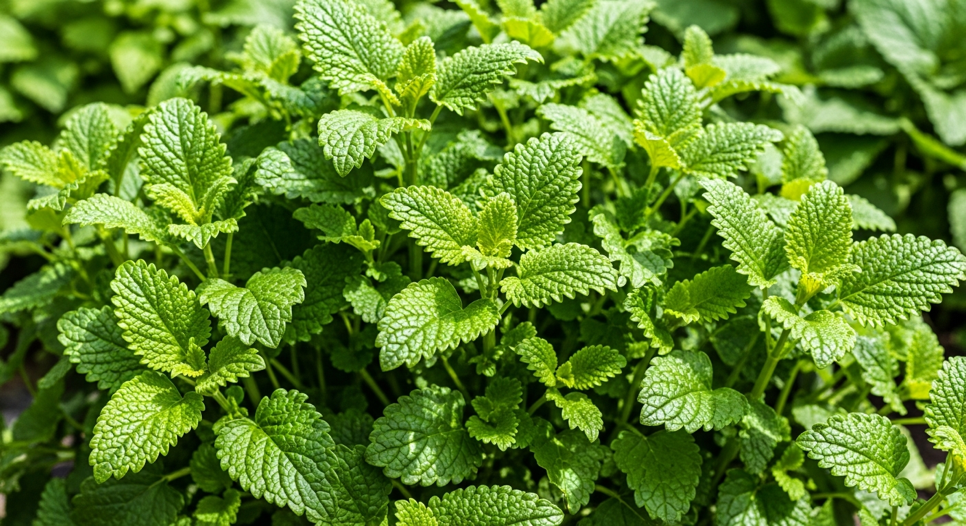
Lemon balm (Melissa officinalis) is an aromatic plant of the mint family (Lamiaceae), known for its pleasant lemon aroma. Lemon balm extract is obtained by processing suitable parts of the plant with controlled extraction methods. The carrier is decisive here: depending on the use, water, glycerin or hydroglycolic solvent systems may be chosen, and the product can be made in liquid or powder form. So there is no single standard; the character of the extract is shaped by the target formulation. So does a leaf's value come from its scent, or from the dissolved compounds it carries?
Beyond the Scent: What Is Inside Lemon Balm Extract?
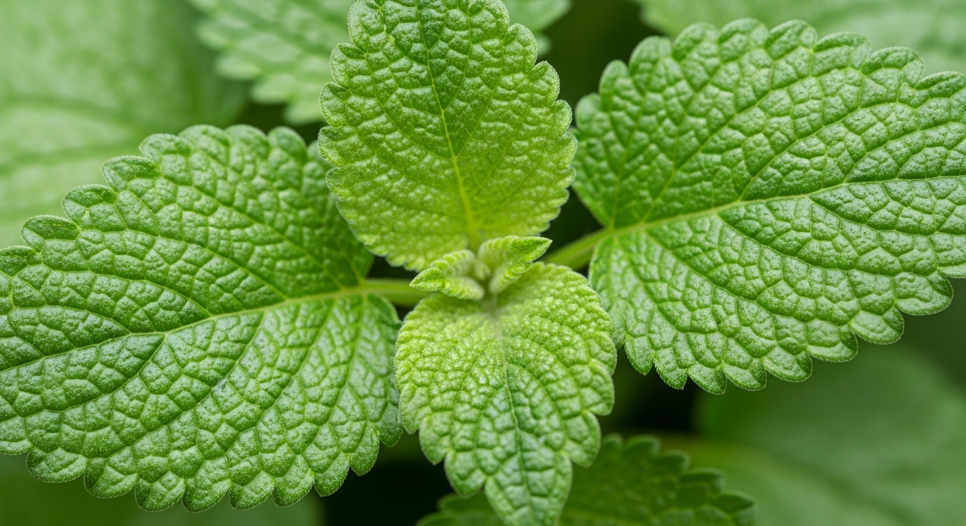
Behind lemon balm's lemon note are volatile terpenes such as citral and citronellal; but these volatiles alone do not describe the real value of an extract. The compound that stands out in lemon balm is its phenolic acids, foremost among them rosmarinic acid. Rosmarinic acid is so defining in lemon balm that it is often used as a quality indicator, that is a biomarker, for the plant. Research has examined the aqueous extract of lemon balm for its antioxidant properties and evaluated it in the context of physiological skin parameters. In short, an extract taken into a water or glycerin carrier brings forward this water-soluble phenolic profile rather than the intense scent of the essential oil.
| Dimension | Lemon Balm Essential Oil | Lemon Balm Extract (water/glycerin) |
|---|---|---|
| Dominant character | Volatile terpenes, citral | Phenolics, rosmarinic acid |
| Form | Oil-based concentrate | Liquid or powder, carrier-based |
| Solubility | Fat-soluble | Mixes with water and glycerin |
| Typical use | Aroma, perfume | Cosmetics, food and supplements |
From Serum to Beverage: Where Is Lemon Balm Extract Used?
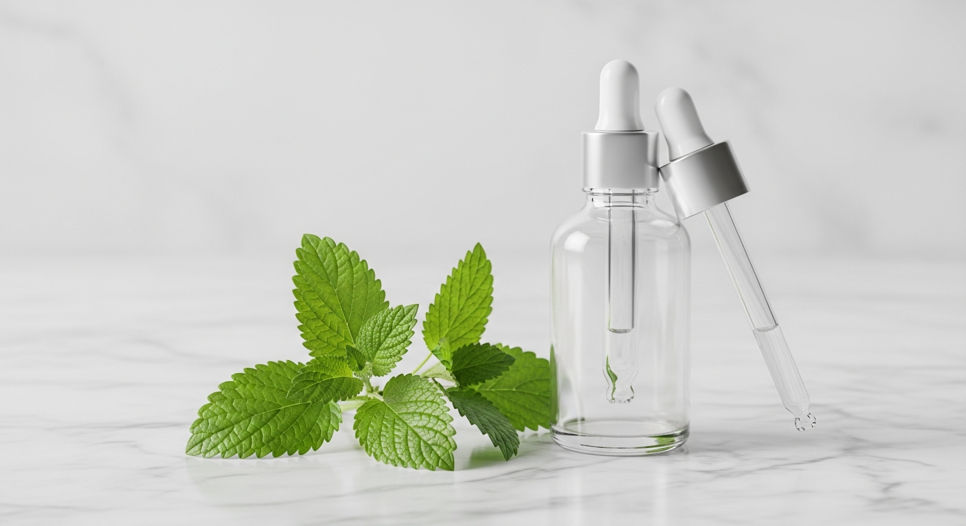
Lemon balm extract is evaluated in many sectors where the search for natural ingredients is growing. On the cosmetic side it appears in facial serums, toners, moisturizing creams, shampoos, hair care products, shower gels and body care products. On the food and supplement side it is used in herbal beverages, functional food formulations, herbal tea blends, dietary supplements and botanical complex products. If you are developing a food or supplement formulation, lemon balm extract can be considered as an option that adapts easily to water-based systems; not as a promise of a definite result, but as a raw material that adds a lemon character and a phenolic profile to the formula. Greenext produces lemon balm extract with extraction systems, carrier options and technical specifications suited to customer demand. The manner and level of use are then evaluated separately according to the product's target market and the relevant regulation.
Frequently Asked Questions (FAQ)
Are lemon balm extract and lemon balm hydrosol the same thing?
No. The hydrosol is the aromatic water phase from the steam distillation of lemon balm and is more scent-based. The extract is an essence obtained by controlled extraction, which can be taken into a water, glycerin or hydroglycolic carrier and stands out for phenolics such as rosmarinic acid. The extract can also be made in liquid or powder form.
Is lemon balm extract liquid or powder?
Both are possible. Depending on the production method and target application, a liquid or powder form is chosen, which allows flexible use across different sectors.
Is lemon balm extract a medicine or a treatment product?
No. Lemon balm extract is a botanical raw material used in cosmetic, food and supplement formulations; it is not regarded as a medical product or a treatment method.
References
- Melissa officinalis L. Aqueous Extract Exerts Antioxidant and Antiangiogenic Effects and Improves Physiological Skin Parameters. Molecules, 2021. https://pmc.ncbi.nlm.nih.gov/articles/PMC8073307/
- Melissa officinalis L: A Review Study With an Antioxidant Prospective. Journal of Evidence-Based Complementary & Alternative Medicine, 2016. https://pmc.ncbi.nlm.nih.gov/articles/PMC5871149/


