

Lemon Balm Hydrosol: The Fresh Lemon Water Distilled From Steam
Why is the water left behind after distilling a plant's essential oil considered not a waste but a valuable cosmetic raw material? The answer lies in what makes lemon balm hydrosol a sought-after water phase for clean beauty formulations.
From Plant to Water: What Is Lemon Balm Hydrosol?
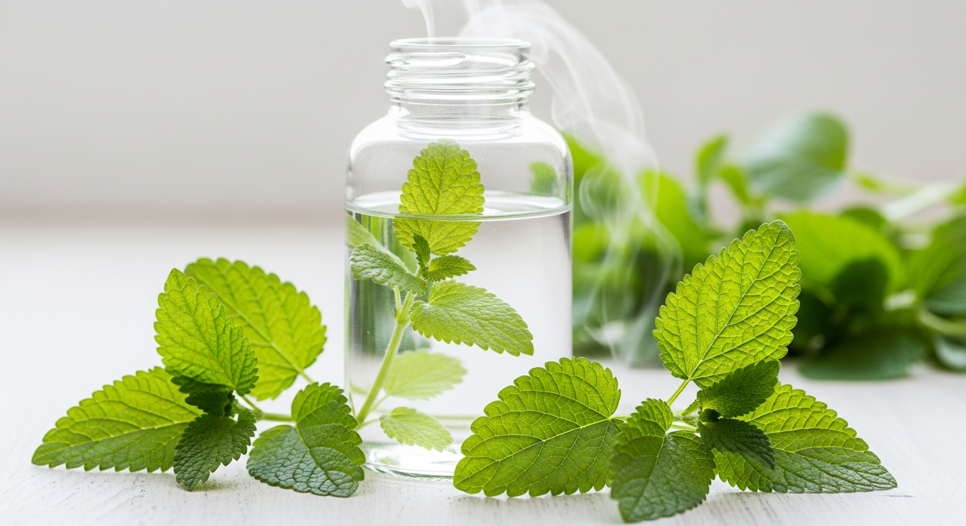
Lemon balm hydrosol (Melissa officinalis Flower/Leaf/Stem Water) is a natural aromatic plant water obtained by the steam distillation of the flower, leaf and stem of the lemon balm plant. During distillation, the water-soluble compounds of the plant pass into the hydrosol phase, while the essential oil separates as a distinct phase. What remains is a lightly lemon-scented water that carries the characteristic aromatic properties of lemon balm. So what does this fresh water do in a formulation, beyond its scent?
The Advantage of the Water Phase: What Does Lemon Balm Hydrosol Add?
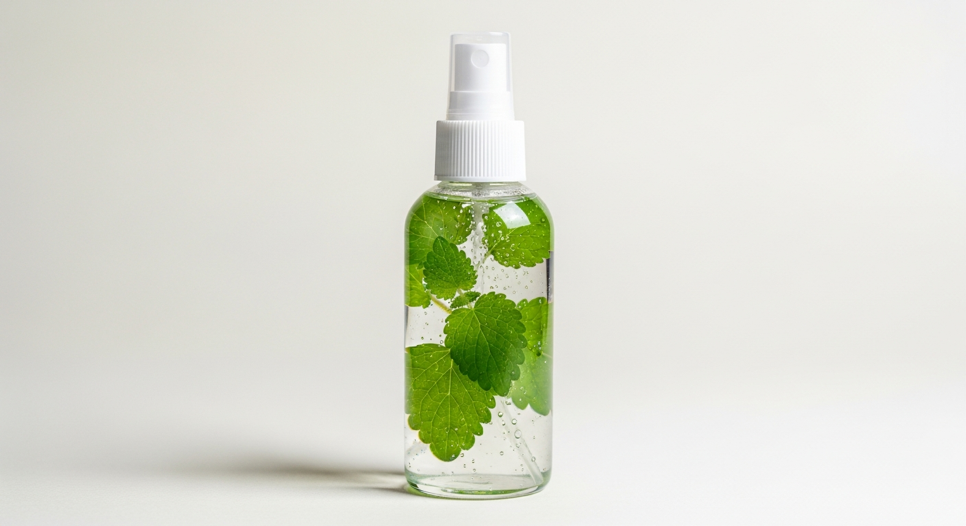
Lemon balm (a plant of the Lamiaceae family) has been studied as a plant rich in phenolic compounds; but the hydrosol carries not the concentrated form of these compounds, rather the water-soluble aromatic fraction. That is what makes it useful in cosmetics: thanks to its water-based structure it enters the water phase of a formula directly, without the need for heavy solvents. With its light, pleasant botanical aroma it gives the product a fresh character, and it can be formulated in harmony with other hydrosols, botanical extracts and natural actives. In this way it contributes to clean beauty and plant-based product concepts. The distinction matters here: a hydrosol is a water phase, while an extract is an essence taken into a carrier.
| Dimension | Lemon Balm Hydrosol | Lemon Balm Extract |
|---|---|---|
| How it is obtained | Steam distillation | Controlled extraction |
| What it carries | Water-soluble aromatic fraction | Phenolics, carrier-based essence |
| Role in the formula | Direct water phase | Liquid or powder additive |
| Highlight | Fresh lemon aroma | Rosmarinic acid profile |
From Toner to Spa: Where Is Lemon Balm Hydrosol Used?
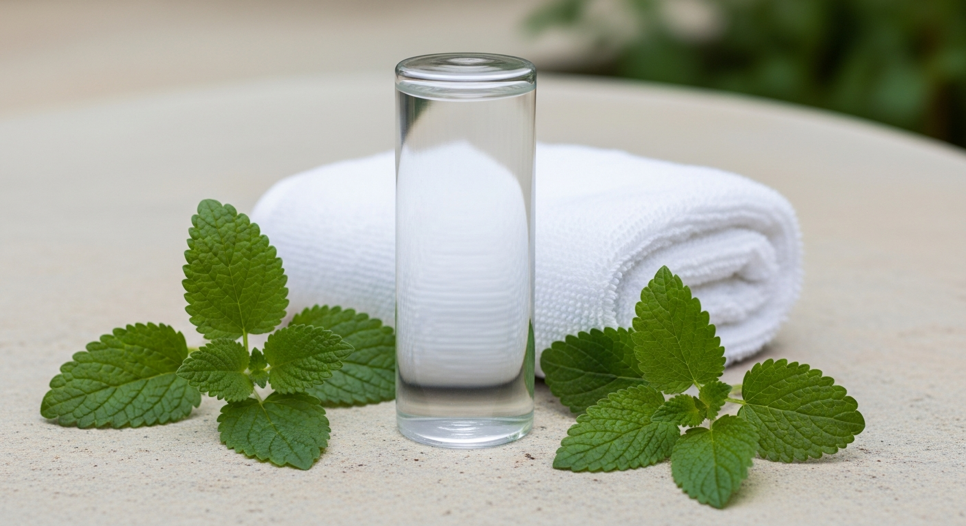
Thanks to its versatile nature, lemon balm hydrosol is evaluated across different cosmetic groups: facial toners, face and body mists, moisturizing lotions, serum and gel formulations, hair care toners and sprays, leave-on hair care products, and natural personal care and spa products. Being usable directly in the water phase makes it a raw material that integrates easily into a formulation. It is also often used together with other hydrosols to build different aromatic profiles; lavender, rose, chamomile, peppermint and rosemary hydrosols are among the most preferred combinations. If you are developing a facial toner or a hair spray, lemon balm hydrosol can be evaluated as a water phase on its own or as part of these combinations. Greenext produces lemon balm hydrosol from carefully selected botanical raw materials with controlled production processes; the manner and level of use are evaluated according to the target market and the relevant regulation.
Frequently Asked Questions (FAQ)
What is the difference between lemon balm hydrosol and lemon balm extract?
The hydrosol is the aromatic water phase from steam distillation and is used directly in the water phase. The extract is an essence obtained by controlled extraction, which can be taken into a water, glycerin or hydroglycolic carrier and stands out for its phenolics. The hydrosol relies more on scent and water-based formulation, the extract on its compound profile.
Which hydrosols is lemon balm hydrosol combined with?
It is most often combined with lavender, rose, chamomile, peppermint and rosemary hydrosols. These combinations give product developers flexibility to build different aromatic profiles and natural-ingredient concepts.
Can lemon balm hydrosol be used directly in the water phase?
Yes. Thanks to its water-based structure it can be added directly to the water phase of a formula and formulated in harmony with other hydrosols, botanical extracts and natural actives.
References
- Melissa officinalis L: A Review Study With an Antioxidant Prospective. Journal of Evidence-Based Complementary & Alternative Medicine, 2016. https://pmc.ncbi.nlm.nih.gov/articles/PMC5871149/
- Melissa officinalis L. Aqueous Extract Exerts Antioxidant and Antiangiogenic Effects and Improves Physiological Skin Parameters. Molecules, 2021. https://pmc.ncbi.nlm.nih.gov/articles/PMC8073307/


