

Peppermint Hydrosol: Water That Cools Without Lowering the Temperature
When you spray a mint-scented water onto your skin, why do you feel an instant coolness, even though the temperature of that water is almost the same as your skin? So where does this freshness come from when there is no real cooling? The answer lies hidden in the aromatic components carried by peppermint hydrosol and in the curious relationship these components establish with perception in your skin.
The Chemistry of Coolness: What Is Peppermint Hydrosol?
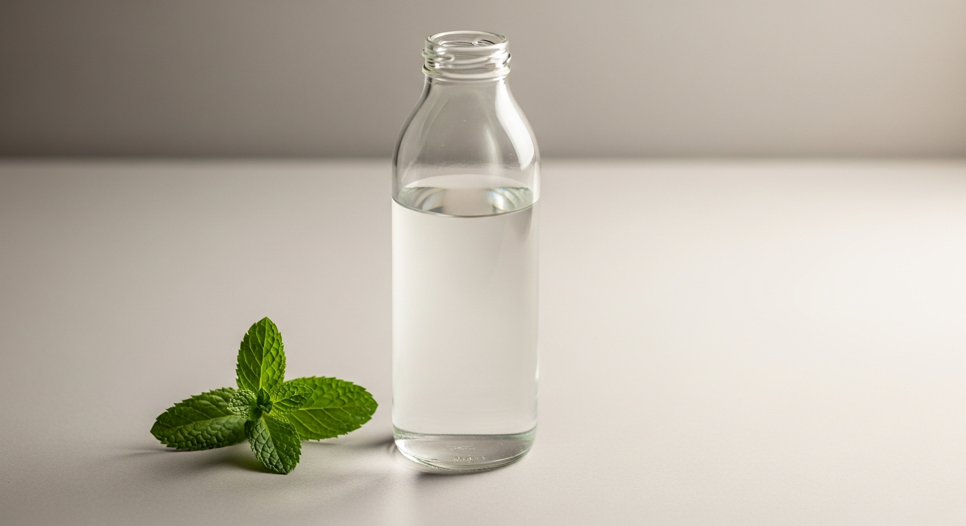
Peppermint hydrosol (hydrolate) is the aromatic water phase that forms during the steam distillation of the leaves of the Mentha piperita plant. The steam carries along the volatile and water-soluble components of the leaf; once it condenses, the oily part separates and that familiar mint-scented water remains. What we call the hydrosol is this aromatic water.
The main component that defines mint's character is menthol; alongside it are terpenes such as menthone and cineole. Here the truly interesting part is this: menthol does not physically cool the skin. Instead, it stimulates the receptors that sense cold in the skin and sends a "coolness" signal to the brain. In other words, the sensation is real but the temperature stays the same. The hydrosol carries not the concentrated form of this profile, but its water-soluble, fresh aromatic fraction; thus it offers mint's invigorating character in a light and water-based form.
Freshness and Skin: Peppermint Hydrosol in Cosmetics
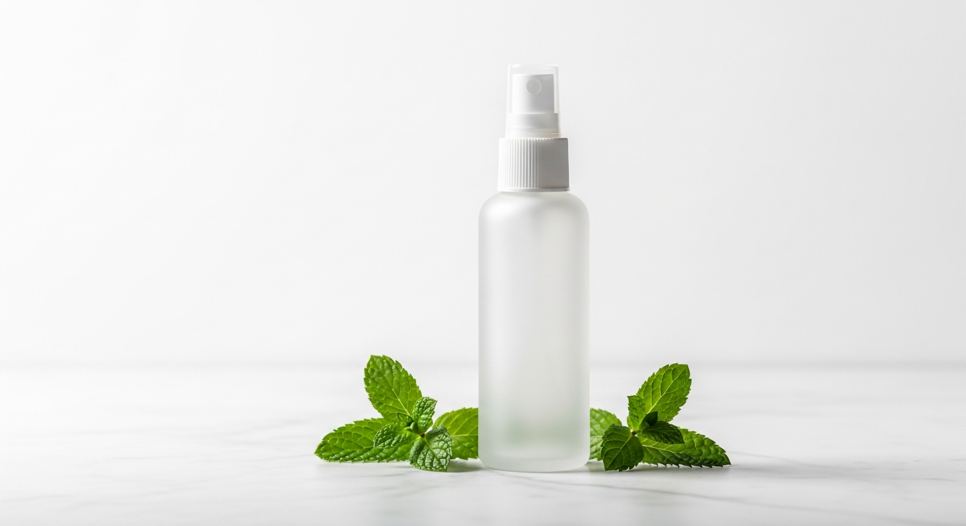
The place of peppermint hydrosol in cosmetics is shaped by this cooling and invigorating perception. Its water-based structure makes it suitable for adding directly to products built on a water phase, such as facial toners, facial mists, after-shave waters and scalp sprays. It stands out especially in refreshing formulations aimed at oily and combination skin.
| Application area | Form of use | Key feature |
|---|---|---|
| Oily/combination skin | Facial toner, facial mist | Water-based, cooling aromatic water |
| Scalp care | Scalp spray, leave-in water | Invigorating mint note |
| General freshness | After-shave water, body mist | Ready to use, light menthol scent |
So when a sensation is this strong, why is the product being this diluted an advantage? Because applying a concentrated menthol source directly to the skin is often too sharp; a light, water-based hydrosol, on the other hand, carries the same fresh note in a controlled and gentle dose. In other words, what makes peppermint hydrosol useful is its balance more than its strength.
From Leaf to Product: Production and Standardisation

The volatile components that give mint its scent are sensitive to heat and storage; the menthol ratio can vary according to the harvest, the variety and the distillation conditions. So how does a cosmetic brand guarantee the same fresh note in every bottle? The answer lies not in the plant itself but in how that water is standardised: running the distillation under control and collecting every batch within the same scent and component range. This is also Greenext's priority in its peppermint hydrosol: making the same coolness note repeatable in every batch.
Frequently Asked Questions (FAQ)
Does peppermint hydrosol really cool the skin?
No, there is no physical cooling. The menthol it contains creates a sensation of coolness by stimulating the receptors associated with the perception of cold in the skin; the measured temperature does not change. That is why it gives a "cooling" perception without actually cooling the skin.
Are peppermint hydrosol and peppermint oil the same thing?
No. Both come out of the same distillation but they are different phases. The essential oil is the concentrated, oil-based part; the hydrosol is the far more diluted water phase carrying the water-soluble aromatic compounds; because it is light, it can be added directly to water-based formulas.
Which skin type is peppermint hydrosol preferred for?
Due to its cooling and invigorating character, it is mostly evaluated in refreshing formulations aimed at oily and combination skin. Even so, it is treated as a cosmetic component; it is not a treatment method on its own.
References
- Mentha piperita: Essential Oil and Extracts, Their Biological Activities, and Perspectives on the Development of New Medicinal and Cosmetic Products. Molecules, 2023. https://pmc.ncbi.nlm.nih.gov/articles/PMC10649426/
- Cold stimuli, hot topic: An updated review on the biological activity of menthol in relation to inflammation. Frontiers in Immunology, 2022. https://pmc.ncbi.nlm.nih.gov/articles/PMC9682018/


