

How Far Can the Vitamin C Declaration in Rosehip Extract Be Trusted?
Does the amount of vitamin C written on the label of a rosehip extract reflect the real value inside that jar, or an assumption taken from the fresh fruit? The fruit of Rosa canina is known as a natural source of vitamin C, and this reputation is not undeserved, but every stage between harvesting the fruit and turning it into an extract takes away some of that vitamin. The real question for a food supplement manufacturer starts here. Which number will be written on the label, and which batch and which analysis result will that number rest on?
What Is Lost on the Way from Fresh Fruit to Extract?
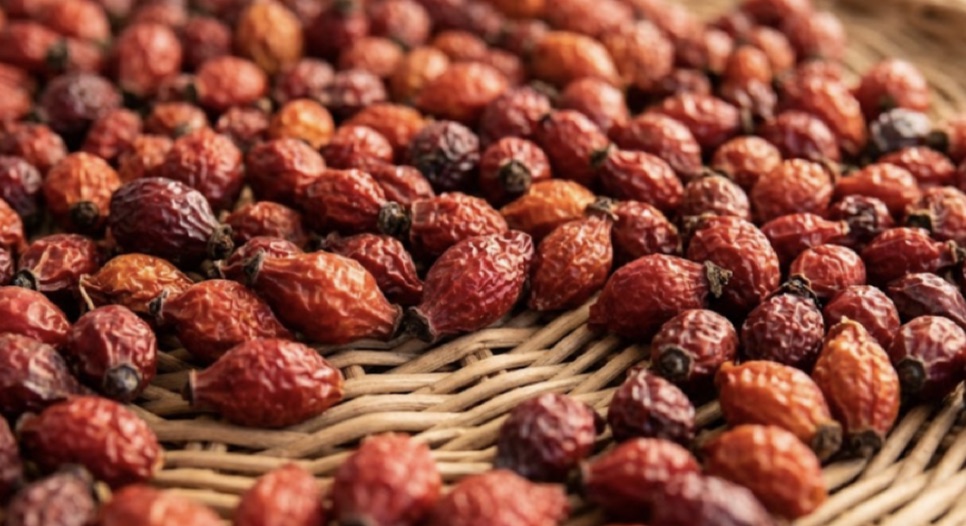
Rosehip is a thorny, perennial plant of the rose family, and the part used is its orange-red fruit. When fresh, this fruit carries a high amount of ascorbic acid, but ascorbic acid is a molecule that is quite sensitive to oxygen, heat and moisture. A study on Rosa species found a wide ascorbic acid range of 0.26 to 5.57 percent on a dry weight basis, showing that the processing method determines the result as much as the species does. The same study showed that drying at 80 degrees for five to ten hours was the method that preserved vitamin C best, while prolonged drying caused loss. It is also noteworthy that freezing did not cause a marked loss over one year. In other words, loss is not inevitable, but it becomes inevitable if left uncontrolled. For the manufacturer, this picture means that the harvest time and the first drying step may be more decisive than the later extraction stage. The earlier and the lower the temperature at which the harvested fruit is processed, the higher the amount of ascorbic acid carried into the extract remains.
Whose Responsibility Is the Number on the Label?
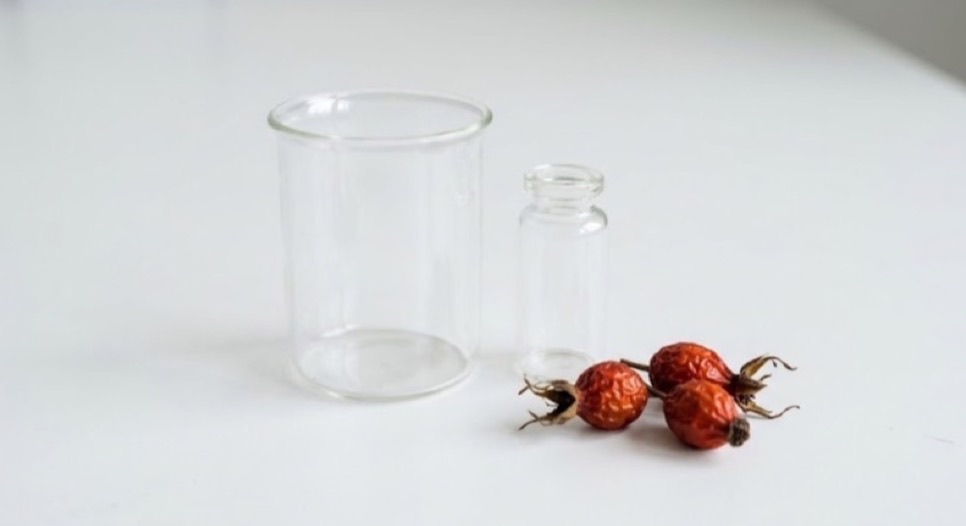
When adding rosehip extract to a formulation, a manufacturer generally relies on the phrase "natural source of vitamin C". But this phrase on its own is not a guarantee. In the same study, no detectable vitamin C was found in roughly half of the commercial rosehip samples tested. This does not mean the raw material is of poor quality. It only means that there can be a large difference between batches and that the declared value always needs to be confirmed by analysis. Under food supplement regulation, meeting the declared nutrient value throughout the shelf life is the manufacturer's responsibility, not the supplier's general statement. For this reason the vitamin C content of each batch is measured separately and that measurement is reflected on the label.
So how does a formulator manage this variability? Generally, instead of relying on a single batch, the formulator works on the average of several batches and leaves a safety margin. Although it looks like a small difference, in a product whose demand rises in winter, this margin is the only thing that keeps the declaration compliant throughout the shelf life. The certificate of analysis here is not a decorative document but the only concrete data on which the formulation decision rests. In an eight-month shelf-life study on rosehip juice, pasteurisation and storage temperature were measured to reduce the amount of bioactive compounds at different rates. The picture works similarly on the raw material side, since a batch kept waiting does not carry its first-day value. If the number on the certificate does not match the real value of the raw material that actually goes onto the line, the problem emerges at the end of the shelf life.
At Which Step Does the Loss Occur?
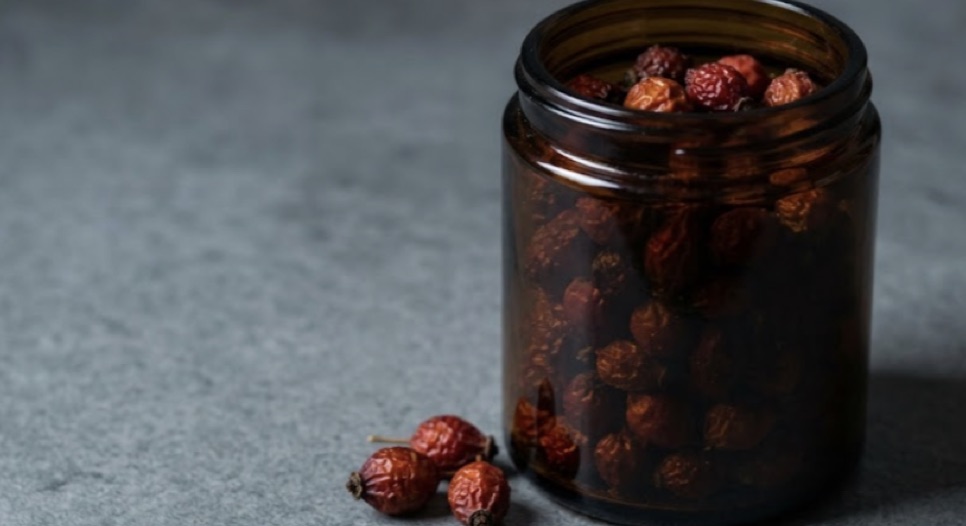
Ascorbic acid decreases not at a single point on the way but at several steps at once. The table below shows together in which direction each processing step affects the final value.
| Processing Step | Effect on Vitamin C | Result in the Formulation |
|---|---|---|
| Drying temperature after harvest | Low and controlled temperature reduces loss | Higher starting value |
| Drying time | Long duration increases oxidation | Batch-to-batch variability |
| Grinding and fine milling | Greater surface area increases oxygen contact | Faster loss in storage |
| Extraction temperature | High temperature can break down the molecule | Final value that needs to be fixed by analysis |
| Storage conditions | Moisture and light speed up loss | Declaration risk throughout the shelf life |
Frequently Asked Questions
Is the vitamin C content of rosehip extract the same in every batch?
No. Since harvest time, drying conditions and extraction method can differ from batch to batch, the content varies, which is why each batch is evaluated together with its certificate of analysis.
Does the phrase natural source of vitamin C apply to every rosehip extract?
The phrase rests on the natural content of the plant, but because of the losses that occur during processing, the actual vitamin C level of each product is measured separately, and no single general value is binding.
How much is rosehip extract affected by storage conditions?
In extracts stored in environments exposed to moisture and light, vitamin C loss speeds up, which is why cool and dark storage is the basic condition that preserves the value throughout the shelf life.
In rosehip, the critical window is the first few hours after harvest. Drying temperature and waiting time already determine the amount of ascorbic acid that will pass into the extract at that stage. The technical information for Greenext's rosehip extract gives the vitamin C content as one to two percent; alongside this the fruit carries polyphenols, carotenoids and fatty acids such as linoleic, alpha-linolenic, oleic, palmitic and stearic acid. The figure that goes on the label, however, comes not from that range but from the analysis of the batch in hand.
References
Raal, A. et al. Species- and Processing-Dependent Variability of Ascorbic Acid in Fruits of 14 Rosa Species and its Redox Behavior toward Iron and Copper Ions. ACS Omega, 2026. https://pmc.ncbi.nlm.nih.gov/articles/PMC13261576/
Torres-Valenzuela LS, et al. Stability of Bioactive Compounds and Antioxidant Activity in Rosehip Juice (Rosa spp.). Molecules, 2024. https://pmc.ncbi.nlm.nih.gov/articles/PMC11173612/


