

Sumac Extract: Natural Tartness from the Spice Rack to Beverage Formulation
What business does that burgundy, tart spice we sprinkle over salads and kebabs at the table have in a beverage formulation? This familiar kitchen flavor, once standardized and concentrated, actually offers far more. Sumac extract is a botanical ingredient that draws the interest of the beverage and food sectors as both a natural source of tartness and color and a strong antioxidant. And because it grows wild across many regions of Anatolia, it also carries the potential of a local and sustainable raw material.
More Than a Spice: What Is Sumac Extract?
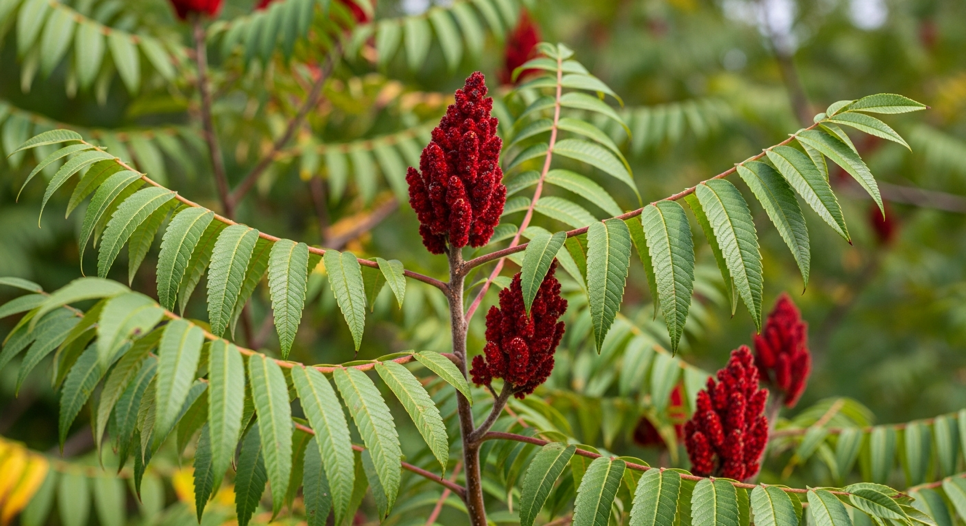
Sumac extract is a concentrate extremely rich in polyphenols, obtained from the dried fruit of the Rhus coriaria L. plant. A single study identified 191 compounds in sumac fruit; 78 of them are hydrolyzable tannins and 9 are anthocyanins.
This rich profile serves three technical purposes. Organic acids give sumac its characteristic tartness, a natural source of acidity and aroma. Anthocyanins provide the fruit's burgundy-red color. Hydrolyzable tannins and other phenolics form the basis of sumac's strong antioxidant capacity. This high tannin content also gives sumac an astringent mouthfeel and a natural preservation capacity, which foreshadows the extract's use on the food side. Taken together, sumac extract offers tartness, color and antioxidant content at the same time in a single botanical raw material.
From Tartness to Preservation: Sumac Extract in Food
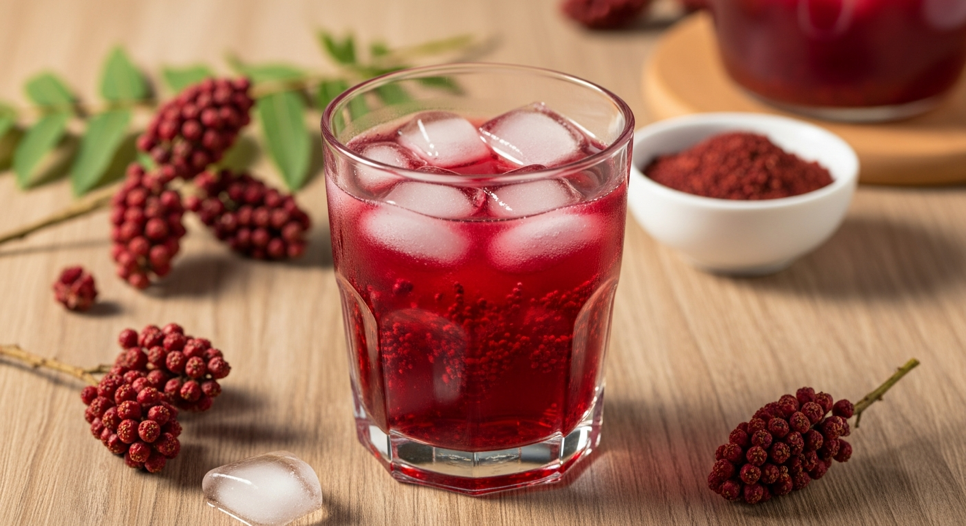
The best-known example of sumac on the beverage side is the traditional sumac sherbet made by steeping its fruit in water; this shows that the tart profile can be carried directly into a drink. The extract form carries the same tartness and burgundy color into modern beverage formulations in a standard and clear way.
Sumac's real technical strength, however, emerges on the food side as a natural preservative and antioxidant. Its antibacterial, antifungal and antioxidant properties bring it forward as a natural alternative to synthetic preservatives.
| Area of use | Function | Highlighted compound |
|---|---|---|
| Beverage (sherbet, functional) | Natural tartness + color | Organic acid, anthocyanin |
| Food preservation | Shelf-life extension, antioxidant | Hydrolyzable tannins, phenolics |
| Sauces and spice blends | Taste and color | Organic acid, anthocyanin |
There is a thought-provoking point here: a spice we have used in the kitchen for centuries can today be an alternative to synthetic preservatives in industry. So how does a "natural" ingredient meet the consistency and shelf-life expectations of a modern production line? The answer lies not in sumac itself, but in the extraction technology that standardizes it.
Beyond the Kitchen: Supplements, Cosmetics and Production
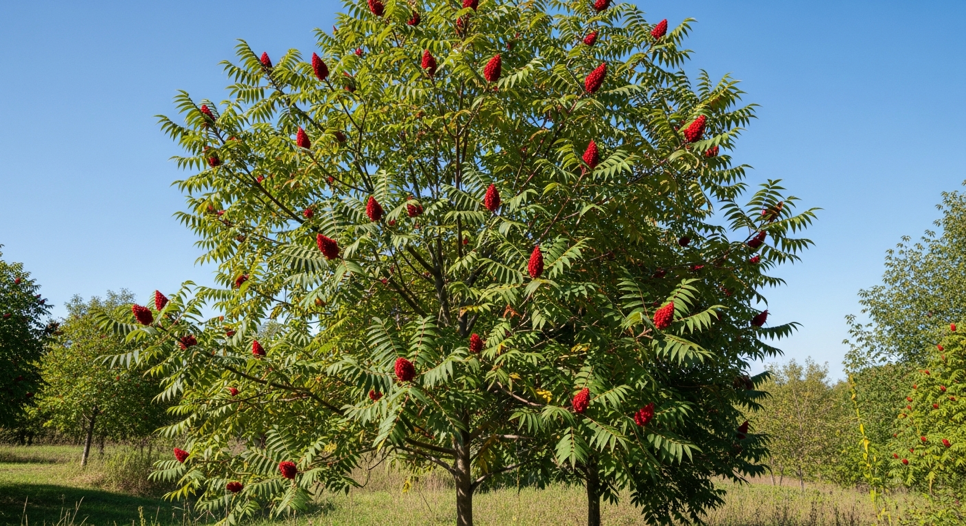
Owing to its high phenolic and tannin content, sumac extract is evaluated as a botanical active with a prominent antioxidant profile in dietary supplement formulations; on the cosmetics side, it is considered a natural ingredient in skincare products for its antioxidant properties.
Because sumac's tartness and color fluctuate with the harvest, the real craft lies in reducing this fluctuation to the same taste and the same burgundy tone in every batch. In Greenext's production approach, standardization is the step that turns the spice into a reliable raw material at industrial scale.
Frequently Asked Questions (FAQ)
Are sumac sherbet and sumac extract the same thing?
Not exactly. Sumac sherbet is a traditional drink obtained by steeping sumac in water; sumac extract is a standardized, concentrated and long-shelf-life form of the same compounds. The sherbet is for direct consumption, while the extract is suited to industrial formulation.
Why is sumac extract used as a natural preservative in food?
Because the hydrolyzable tannins and phenolics it contains carry strong antioxidant and antimicrobial properties, which makes it a natural alternative to synthetic preservatives.
Does sumac extract give a beverage both tartness and color?
Yes. The organic acids it contains provide natural tartness, while the anthocyanins provide the burgundy-red color; so two technical needs can be met with a single ingredient.
References
- Pharmacological and Antioxidant Activities of Rhus coriaria L. (Sumac). Antioxidants, 2021. https://pmc.ncbi.nlm.nih.gov/articles/PMC7828031/
- Physiochemical properties and medicinal, nutritional and industrial applications of Sumac (Rhus coriaria): A review. Journal of Ethnopharmacology, 2020. https://pmc.ncbi.nlm.nih.gov/articles/PMC7002821/


