

Thyme Hydrosol: The Spiced Water That Takes Its Sharpness From Phenols
How can a clear, colourless water remind you of a spice shelf the moment it comes near your nose? Most people meeting thyme hydrosol for the first time ask this question. Distilled from the leaves and flowers of the Thymus vulgaris plant, this water carries the sharp and warm aroma of thyme with surprising clarity. Behind that clarity lie two phenolic constituents: thymol and carvacrol.
What Is Thyme Hydrosol and Why Is Its Odour So Assertive?
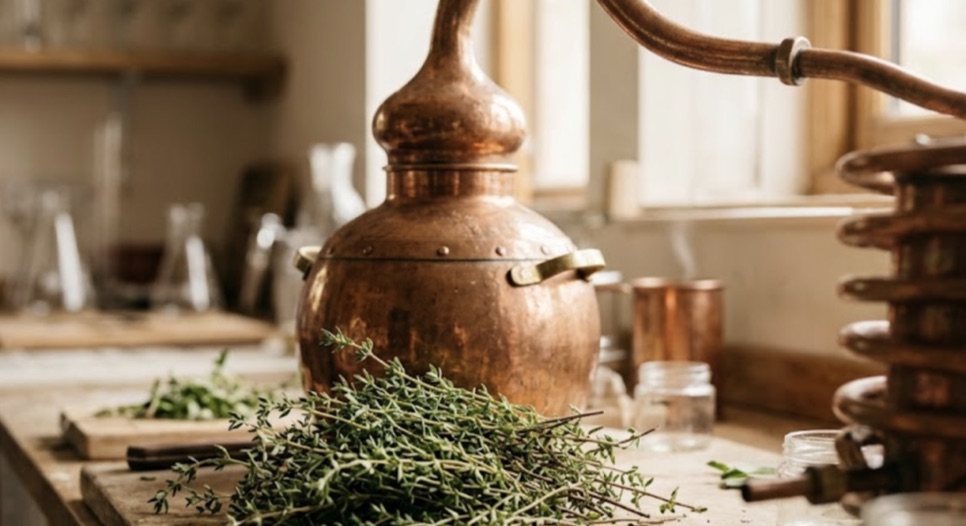
Thyme hydrosol is the water phase collected by condensation during distillation; it should not be confused with the water remaining at the bottom of the still. By mass it is almost entirely water, yet a small fraction of volatile constituents coming from the plant is present in it in dissolved form. It is precisely this small fraction that gives the hydrosol its character.
What makes thyme special at this point is that its characteristic constituents are phenolic in structure. Thymol and carvacrol are relatively well soluble in water compared with many terpenes. For this reason the signature constituents of thyme pass markedly into the hydrosol, and what emerges is a water that smells sharper, more spiced and more herbaceous than many hydrosols.
Thymol and Carvacrol: The Phenolic Signature of the Volatile Fraction
In a 2023 study examining seven different Lamiaceae hydrosols, thymol stood out in the volatile fraction of thyme hydrosol with a share of 18.84 percent, while the total share of phenols was reported as 20.78 percent. There is a critical reading note here: these percentages describe shares within the volatile fraction the hydrosol carries, not within the liquid in the bottle. The hydrosol itself is by mass almost entirely water.
One more detail in the same study is even more interesting: carvacrol was not detected at all in the thyme hydrosol sample examined. Yet carvacrol is known to take the lead in other thyme waters. The same plant species, the same method; so how is such a different signature possible? Much of the answer lies in the chemotype. Thyme forms different chemotypes according to its genetics and the geography where it grows, and this variation is reflected directly in the odour profile of the distilled water. The practical conclusion is this: a consistent thyme hydrosol requires a consistent raw material and a disciplined distillation process.
Thyme Hydrosol on the Formulation Bench: From Cosmetics to Food
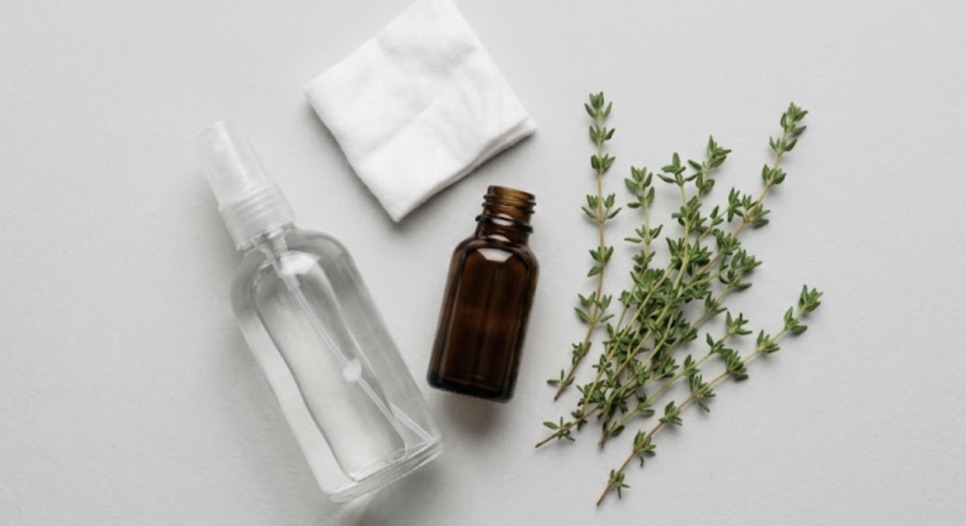
On the cosmetic side, thyme hydrosol is considered in the aqueous phase of products such as tonics, face sprays and shampoos. Formulators often prefer it for two reasons: its sharp aromatic profile, which gives character to a formula, and its being a natural aqueous raw material carrying phenolic constituents.
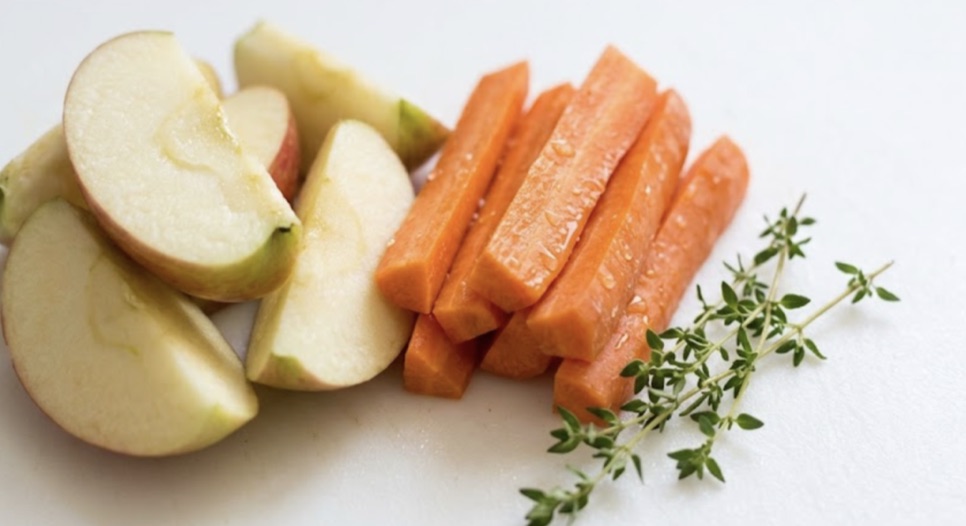
On the food side, thyme hydrosol is a material researched along both an aroma and a natural preservation axis. In a 2011 study comparing different plant hydrosols as wash water on freshly cut carrots and apples, thyme hydrosol gave the strongest result, with a 20 minute application reducing the count of Escherichia coli O157:H7 on apple samples by 1.42 log. Findings of this kind explain why thyme hydrosol appears regularly in food processing research.
| Property | Thyme Hydrosol |
|---|---|
| Botanical source | Thymus vulgaris leaves and flowers (Lamiaceae) |
| Sensory profile | Sharp, spiced, herbaceous and warm |
| Characteristic constituents | Thymol and carvacrol (within the volatile fraction) |
| Cosmetic use | Tonic, face spray and shampoo formulations |
| Food axis | Aroma and wash studies for natural preservation |
The real difficulty thyme presents to a producer begins in the field. Chemotype variation, harvest time and the phenolic load of the plant can change from batch to batch, which creates the risk of two waters carrying the same label smelling different. At Greenext we therefore begin thyme hydrosol production with the raw material: by working with plant batches that preserve the same chemotype character and by keeping distillation parameters fixed, we aim to place in the formulator's hands a water carrying the same sharp signature every time.
Frequently Asked Questions (FAQ)
Does the expression 18.84 percent thymol in thyme hydrosol mean that close to a fifth of the liquid in the bottle is thymol?
No. That percentage belongs to the analysis of the small volatile constituent fraction present in dissolved form within the hydrosol. The hydrosol itself is by mass almost entirely water; thymol is the prominent constituent of the aromatic share that water carries.
Why can the odour of thyme hydrosol differ from batch to batch?
Thymus vulgaris is a species able to form different chemotypes; genetics, geography and harvest time change the phenolic profile of the plant. The water of a thymol-dominant batch and the water of a carvacrol-dominant batch smell different even when they come from the same species. Raw material selection is therefore decisive.
For what purpose is thyme hydrosol researched in the food sector?
Research concentrates on two axes: its giving a spiced aroma to a product, and its natural preservation potential in applications such as the washing of freshly cut fruit and vegetables. In published comparative studies, thyme hydrosol has given prominent results among the plant hydrosols tested.
References
Investigation of Volatile Components and Assessment of Antioxidant Potential in Seven Lamiaceae Plant Hydrosols. Molecules, 2023. https://pmc.ncbi.nlm.nih.gov/articles/PMC10780048/
Efficacy of various plant hydrosols as natural food sanitizers in reducing Escherichia coli O157:H7 and Salmonella Typhimurium on fresh cut carrots and apples. International Journal of Food Microbiology, 2011. https://pubmed.ncbi.nlm.nih.gov/21592604/


