

Yarrow Hydrosol: The Toning Water of a Bluish Distillate
Why does the distillate of a meadow herb with yellowish-white flowers sometimes turn a bluish, greenish tone? And what is this plant, known for thousands of years as "woundwort", looking for inside the toning toners of modern cosmetics? The answer lies hidden in yarrow hydrosol and in that curious colour that appears during distillation.
From Flower to Water: What Is Yarrow Hydrosol?
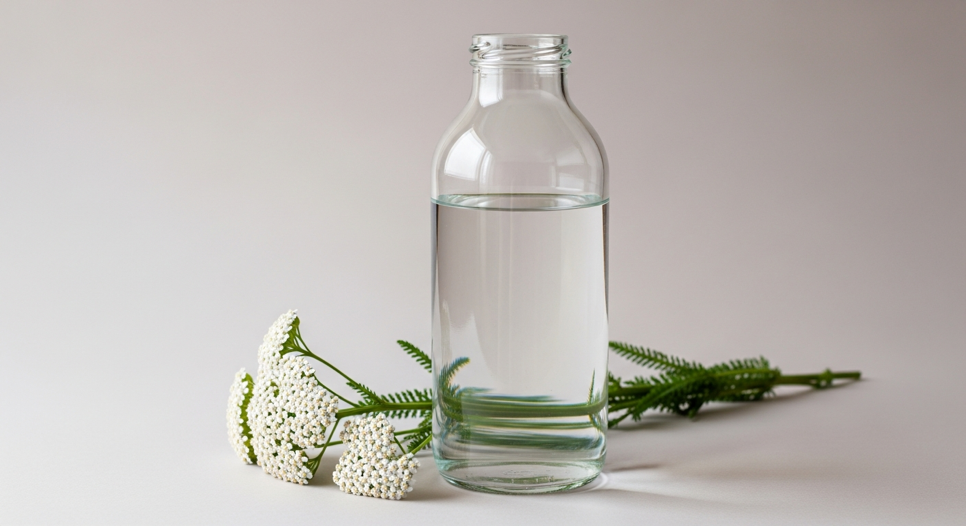
Yarrow hydrosol (hydrolate) is the aromatic water phase that forms during the steam distillation of the above-ground parts of the Achillea millefolium plant. The steam carries along the volatile and water-soluble components of the plant; once it condenses, the oily part separates and a scented water remains. The hydrosol is this water left behind from the distillate.
The most striking feature of yarrow is chamazulene, which appears during distillation. This component is not present in the fresh plant; it forms under heat from a precursor called matricin and gives the essential oil and distillate a characteristic blue-green tone. The rest of the plant's profile is also rich: flavonoids such as luteolin and apigenin, caffeoylquinic acid derivatives and sesquiterpene lactones make yarrow a botanical source that stands out in research for its antioxidant and skin-soothing properties. The hydrosol carries not the concentrated form of this profile, but its water-soluble, gentle aromatic fraction. So is this colour that appears in distillation merely a visual curiosity, or a sign of the plant's chemistry?
Toning and Soothing: Yarrow Hydrosol in Cosmetics
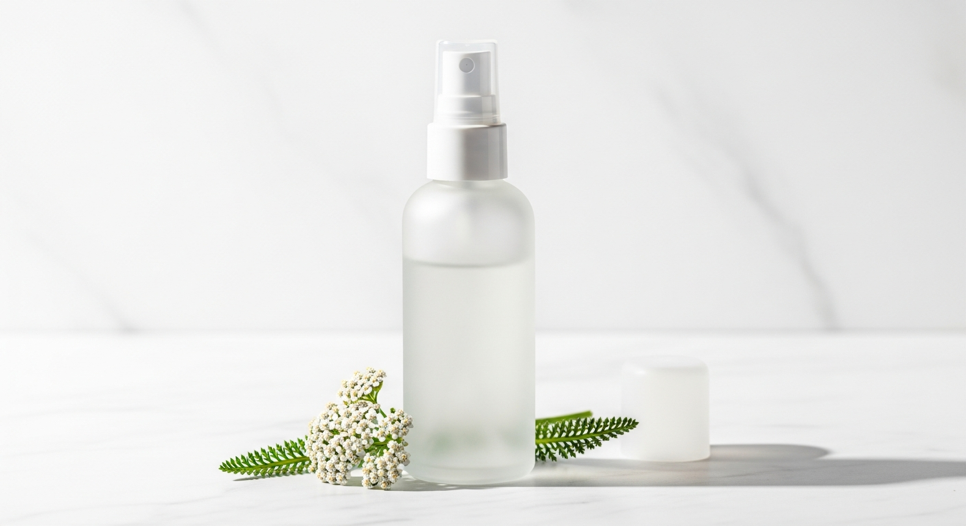
The place of yarrow in cosmetics is shaped by its traditionally toning (astringent) and soothing character. Its water-based structure makes the hydrosol suitable for adding directly to facial toners, facial mists, masks and especially formulations aimed at oily or combination skin. Research notes that Achillea species contain active components of interest for skin care products.
| Application area | Form of use | Key feature |
|---|---|---|
| Oily/combination skin | Facial toner, pore toner | Water-based, toning aromatic water |
| Sensitive skin care | Facial mist, mask water phase | Soothing, flavonoid-containing profile |
| General skin care | Refreshing toner | Light, directly applicable |
There is a contradiction here: chamazulene, which gives yarrow its colour and its name, is fat-soluble and is concentrated more in the essential oil; in the hydrosol it is present only at trace levels. So why is the hydrosol still valuable? Its value lies not in replacing the oil or the extract, but in carrying the yarrow character into the formulation as a gentle, water-based and directly applicable toning water.
From Flower to Product: Production and Standardisation
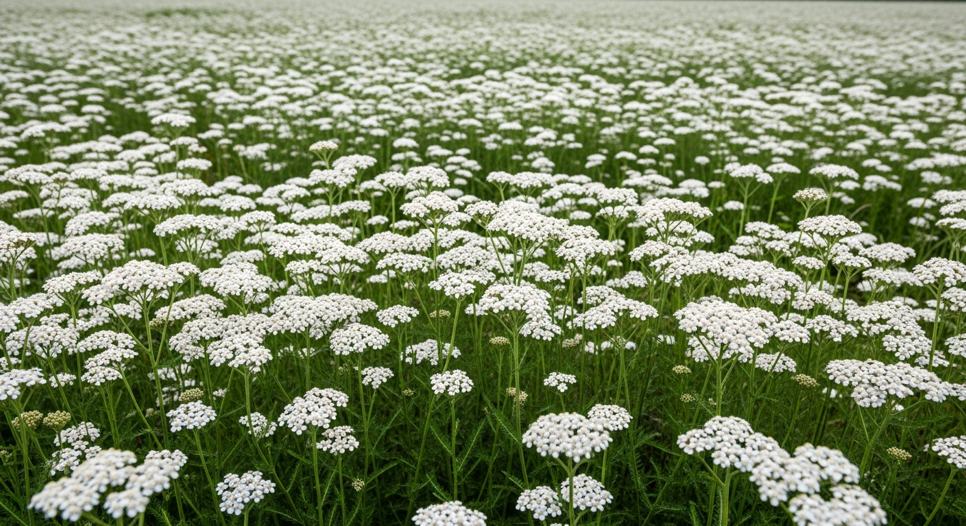
The composition of a hydrosol varies according to the origin of the plant, the harvest and the distillation conditions; considering components such as chamazulene that form during distillation, this variability is even more pronounced. Standardisation narrows this uncertainty: distillation parameters are kept under control and every batch is collected within the same scent and component range. This is also what Greenext aims for in its yarrow hydrosol; reducing the caprice of distillation to a consistent water phase that enters the formulation with confidence.
Frequently Asked Questions (FAQ)
Why can yarrow hydrosol have a bluish-green colour?
The reason is a component called chamazulene that forms under heat during distillation. Chamazulene is not present in the fresh plant; it arises from a precursor called matricin under the effect of heat and can add a characteristic blue-green tone to the distillate. The intensity of the colour varies according to the harvest and distillation conditions.
Which skin type is yarrow hydrosol preferred for?
Due to its traditional toning (astringent) character, it is mostly evaluated in formulations aimed at oily and combination skin. Even so, it is treated as a cosmetic component; it is not a treatment method on its own.
Are yarrow hydrosol and yarrow oil the same thing?
No. Both come out of the same distillation but they are different phases. The essential oil is the concentrated, oil-based part; the hydrosol is the far more diluted water phase carrying the water-soluble aromatic compounds. This is why the hydrosol is lighter and can be added directly to water-based products.
References
- Achillea Species as Sources of Active Phytochemicals for Dermatological and Cosmetic Applications. Oxidative Medicine and Cellular Longevity, 2021. https://pmc.ncbi.nlm.nih.gov/articles/PMC8018854/
- Achillea millefolium L. and Achillea biebersteinii Afan. Hydroglycolic Extracts–Bioactive Ingredients for Cosmetic Use. Molecules, 2020. https://pmc.ncbi.nlm.nih.gov/articles/PMC7436264/
- Photochemical and Oxidative Degradation of Chamazulene Contained in Artemisia, Matricaria and Achillea Essential Oils and Setup of Protection Strategies. Molecules, 2024. https://pmc.ncbi.nlm.nih.gov/articles/PMC11173868/


